

PREM PRAKASH UPADHYAY/ Pithoragarh
After a prolonged spell of monsoon rains, landslides and disrupted routes, tourism activity in the border district Pithoragarh is gradually coming back to life. As the clouds begin to clear, the familiar grandeur of the Himalayas is once again drawing pilgrims and tourists towards this region.
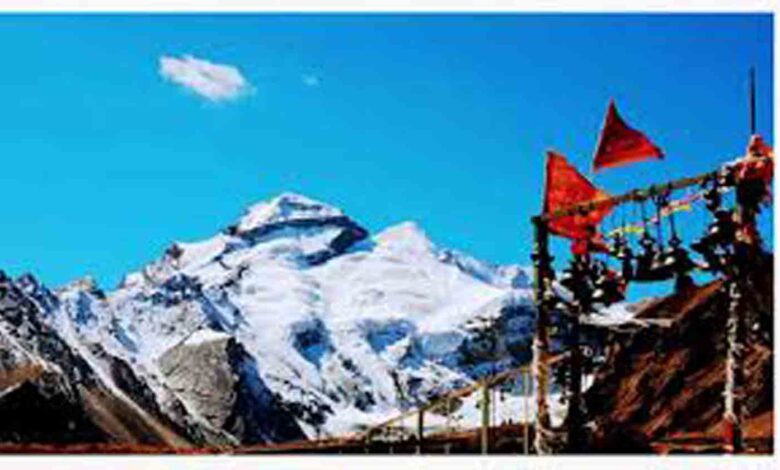
From the spiritual landscape of Adi Kailash and Om Parvat to the abundant natural beauty found in Munsiyari, the autumn tourism season has begun to make its presence felt.
This is not merely about the return of tourists, the locals say. It is also about the return of hope for the owners of hotels, restaurants, homestays, taxis and shops in markets aside from the guides whose livelihoods are closely linked to tourism. For the border region, tourism is not simply a recreational activity; it is an important pillar of the local economy.
The date for the second phase of the Adi Kailash pilgrimage has not yet been finalised. Even so, some pilgrims have already begun travelling towards the sacred destination. Once the administration nods following clearance of the travel routes, pilgrim movement is expected to gain pace. Online hotel bookings have, however, begun, with around 30–35 per cent of rooms reportedly booked so far in Munsiyari as per the hoteliers. This despite the fact that the stretch from Dharchula to Kulagarh along the Adi Kailash route is still not completely back to normal.
Tourists from Bengal, particularly around the period of Durga Puja festivities, traditionally play an important role in the local tourism economy. Hoteliers are once again hoping for a healthy influx this year, with tourism activity expected to gain further momentum around mid-October.
The environmentalists nevertheless warn against over-tourism in this ecologically fragile part of the Himalayas. “Tourism must grow, but not beyond the carrying capacity of the mountains. Finding this balance is of immense importance, as it will determine the future of tourism in the border region,” observed one of them.
Another echoed the view, saying that the Himalayas are not an ordinary tourist destination. “Their roads, slopes, forests, water sources and glaciers are highly sensitive. The region therefore needs to move beyond the idea that more tourists always mean better tourism. Safe roads, reliable communication, effective disaster management, cleanliness and environmentally responsible tourism must become integral parts of a long-term tourism strategy,” he added.