


PIONEER EDGE NEWS SERVICE/ Dehradun
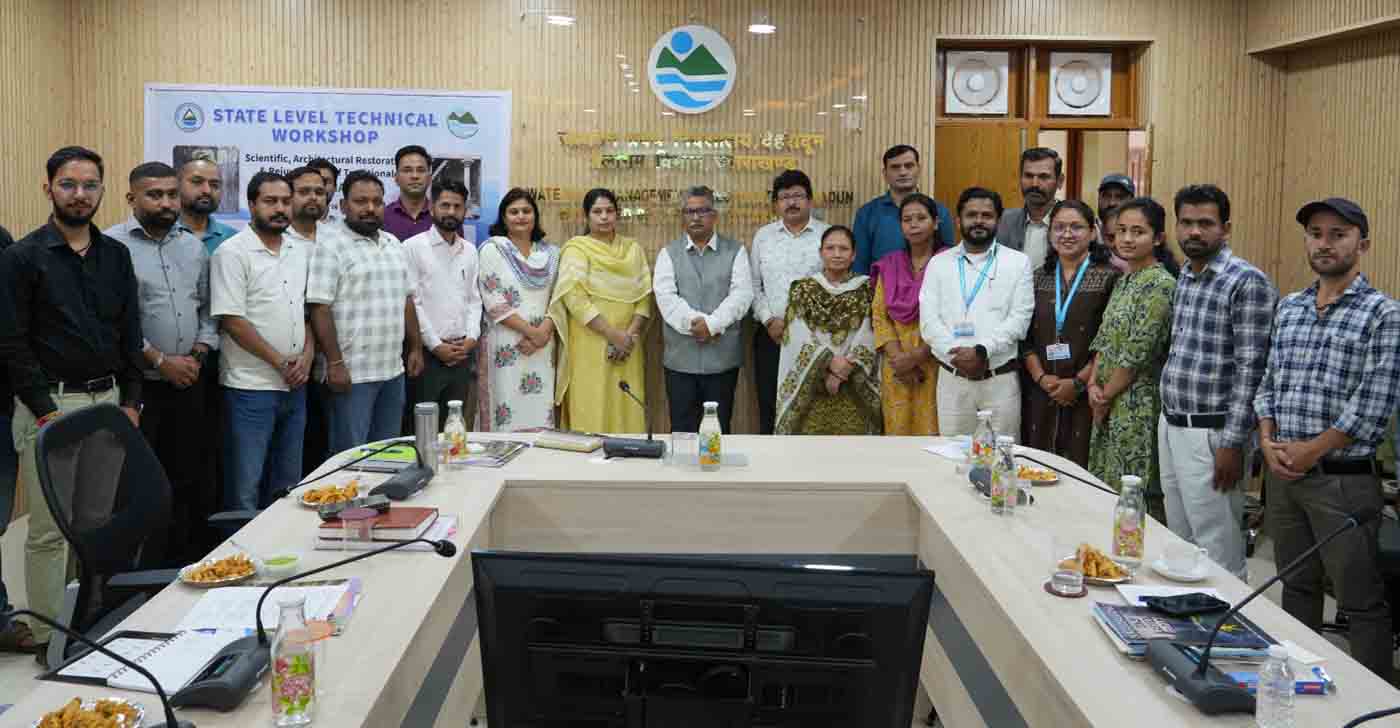
The Spring and River Rejuvenation Authority (SARRA) has started the process of rejuvenation of 54 historical water sources in the State. On Monday, the authority organized a state-level technical workshop on ‘Scientific, Architectural Conservation and Restoration of Traditional Streams and Canals’ at the directorate of Watershed Management in Dehradun. Social coordinators and engineers from all 13 districts of the State participated in the workshop.
In her address, the additional chief executive officer (ACEO) of SARRA, Kahkashan Naseem said that streams and springs are not just sources of water supply but they are living symbols of Uttarakhand’s cultural identity and ancient architecture. She called for making the conservation campaign a mass movement with the participation of local communities. The director general of Uttarakhand State Council of Science and Technology, Durgesh Pant, stated that the restoration of traditional water sources is a scientific and ecological process. He emphasized the importance of spring-shed management, scientific study of recharge zones, canals and the integration of hydrogeological techniques.
Nagendra Rawat of Hemwati Nandan Bahuguna Garhwal University, while lecturing on Zero-Cement Structural Engineering, explained that the cement-free stone corbelling and load-bearing techniques in ancient wells protect structures from seismic shocks.
In the first phase of the workshop, a work plan was presented for the restoration of 54 historic and traditional streams and canals in the State. In the workshop the engineers were given clear instructions that no cement-based alterations would be made to the original stone masonry and historical structures. Social coordinators were also trained in geo-tagging, GIS mapping, data collection, and, in collaboration with village Panchayats, the construction of canals and contour trenches in recharge zones.
This initiative of SARRA has created a strong state level base for the integrated conservation of Uttarakhand’s ancient water culture, traditional ‘Jal Mandir’ architecture and modern groundwater science.


