
INTERVIEW
HASAN HADI /Dehradun
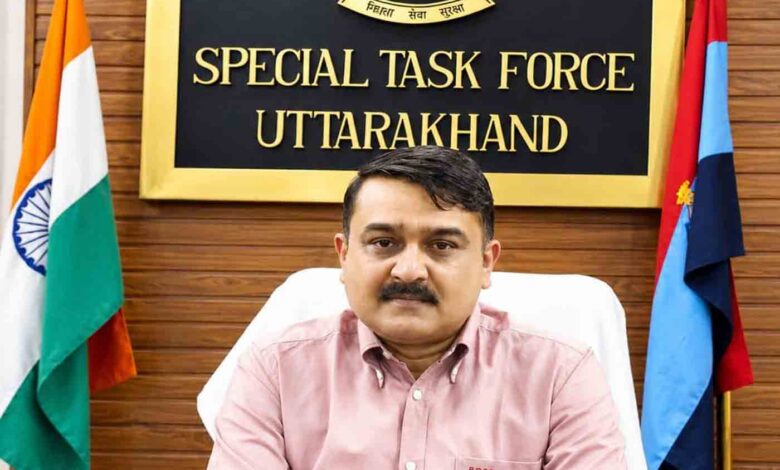
Many young people are currently in the primary stage of radicalisation and are under the observation of the Special Task Force (STF). Those who appear likely to engage in terror related activities are dealt with at an early stage. Pakistan based terror groups and ISI agents are targeting vulnerable youth by exploiting religious sentiments and spreading radical ideologies through online conversations and social media. The STF has already busted two such cases in the State and is continuously monitoring social media platforms for similar activities. In an interaction with The Pioneer, STF senior superintendent of police Ajai Singh said that the force is working to dismantle drug networks while maintaining strict surveillance on terror related activities in Uttarakhand.
What are the key focus areas of the Uttarakhand STF at present?
Our first priority is cyber fraud as it affects everyone from individuals and businesses to government institutions. Our second focus is narcotics, as drug abuse among youth has become a serious challenge. We are actively working to curb drug trafficking and addiction. Our third priority is crimes against women and children in any form, whether domestic violence, physical abuse or crimes committed through social media. We aim to provide immediate assistance and support to victims.
What should a victim do in the first hour after a cyber fraud?
There are mainly two types of cyber crimes—financial fraud and social media-related harassment or blackmail, which is often committed by someone known to the victim. If someone becomes a victim of cyber fraud, they should immediately register an e-zero FIR instead of waiting to visit a police station. They should also call the 1930 Cyber Helpline without delay. Prompt reporting allows cyber experts to quickly freeze the bank accounts involved and improve the chances of recovering the money.
What strategy is the STF following to break the drug supply chain instead of only arresting peddlers?
In Uttarakhand, locally produced drugs are mainly charas, which is cultivated in small quantities in mountainous areas. Hard drugs like heroin, MD and synthetic drugs are brought into the State from outside. At present, there is no evidence of a major drug cartel operating within Uttarakhand. However, we are targeting organised networks. Habitual offenders involved in seven or eight NDPS cases are being booked under the PIT NDPS Act. So far, action has been taken against 15 organised drug traffickers, and 40–50 more suspects have been identified for further action.
What are the main drug routes and supply chains into Uttarakhand?
In Uttarakhand, charas is produced in limited quantities in some mountainous areas. Most other drugs, including heroin, MD and synthetic drugs, are trafficked into the State from other parts of the country. Recently, the STF busted a synthetic drug laboratory linked to operators based in Mumbai. Some drug trafficking networks also involve foreign nationals. Between 2024 and 2026, the STF arrested eight foreign nationals in connection with drug trafficking cases.
Terror groups and cyber criminals are increasingly using social media for recruitment. How is the STF monitoring such activities?
The STF has already busted two terror related cases in the State. We classify radicalisation into three stages—primary, intermediate and extreme. In the primary stage, young people showing early signs of radicalisation are counselled and closely monitored. In the intermediate stage, a person may not be ready to commit an offence, but their conversations and online activities may reflect anti national views, so they remain under observation. In the extreme stage, if a person appears ready to carry out anti national or terror related activities, the STF takes legal action and arrests them.