
AI must empower, not replace mediators: ICA-RICS symposium calls for ethical guardrails

PIONEER EDGE NEWS SERVICE/Dehradun
Legal experts, policymakers and regulators on Saturday stressed that human judgement, confidentiality and professional accountability cannot be delegated to an algorithm. At the symposium “Mediation in Transition: Institutional Trust, Professional Standards and the Age of Artificial Intelligence”, organised by the Indian Council of Arbitration (ICA) with the Royal Institution of Chartered Surveyors (RICS), speakers said India’s mediation must rest on institutional credibility and ethical safeguards.
Nigel Clarke, independent chair of the RICS Standards and Regulation Board, announced draft RICS guidance on AI in dispute resolution for public consultation in early 2027. AI, he said, can assist decision-making but cannot replace human judgement. He highlighted the Women in Dispute Resolution Scholarship for India, a funded place on the RICS Diploma in International Arbitration.
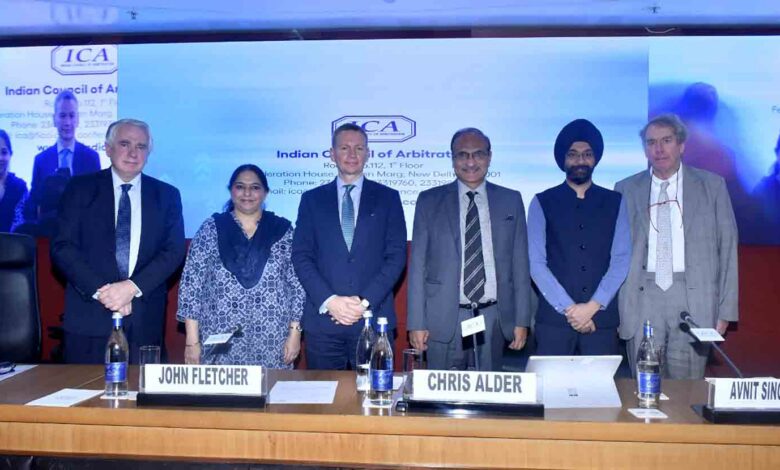
Arun Chawla, ICA director general, said that mediation is an instrument of commercial continuity and technology should empower mediators, not replace them. RICS’s Chris Alder said that India can build responsible technology use into mediation from the outset. Alder moderated a panel with Avnit Singh Arora (director, Arbitration and Conciliation, Department of Legal Affairs, Ministry of Law and Justice), Priya Hingorani (senior advocate, Supreme Court, and ICA Governing Body Member) and John Fletcher (executive director, Dispute Resolution Service, RICS). Panellists called AI a “junior assistant”, not a substitute for human judgement, and warned that persuasive but inaccurate AI analyses can produce flawed settlements. They urged data-privacy safeguards, human cross-checking and experienced mediators.