Free instruments, training and pensions from Culture Dept to promote Uttarakhand’s Dhol-Damau

ANJALI YADAV/Dehradun
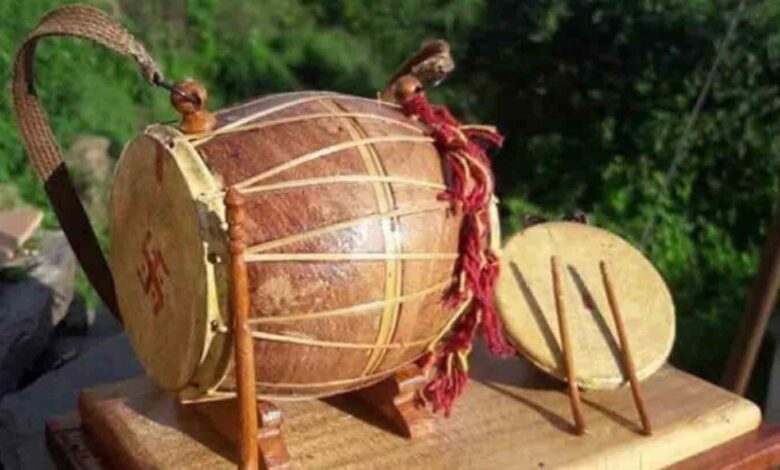
The Culture department is providing free musical instruments, traditional costumes, training and financial assistance to artists under various schemes aimed at preserving the State’s folk traditions and encouraging younger generations to learn traditional art forms such as Dhol-Damau.
The senior personal assistant Surendra Singh said that eligible Scheduled Caste beneficiaries are provided free musical instruments, including dhol and damau, under a dedicated scheme. Applicants must belong to the Scheduled Caste community and hold a Below Poverty Line (BPL) card to qualify.
Under a separate scheme for Scheduled Tribe communities, beneficiaries can also receive masak bean and ransingha, along with traditional costumes. Singh said that the instruments and costumes are provided according to regional traditions and applicants’ requirements. The communities covered include Jaunsari, Bhotiya and Tharu.
The department is also implementing the Guru-Shishya Parampara scheme to pass traditional skills on to younger generations. Six-month training workshops are organised under the initiative, with students receiving Rs 2,000 per month and gurus paid Rs 3,000 per month for imparting their skills for a period of 6 months.
For 2026-27, the department has allocated around Rs 20 lakh each for schemes benefiting Scheduled Caste and Scheduled Tribe communities. Singh said that applications were being received, but no expenditure had been made under these schemes so far in the current financial year. Musical instruments are purchased through tenders based on applications and beneficiaries’ requirements.
The department is also providing monthly pensions to veteran artists. Singh said that around 150 artists were currently receiving the pension, which has been increased from Rs 3,000 to Rs 6,000 per month. To support emerging talent, the department conducts registrations and auditions periodically.
Artists who qualify and register with the department are given opportunities to perform at its cultural programmes. The department also documents its cultural programmes through photography and videography to maintain records of performances and events, helping preserve the State’s cultural heritage.