From temple Kirtans to the Chinese stage, Singh now teaching Kathak in Nainital

AFZAL HUSSAIN FAUJI/Nainital
At an age when children usually have toys in their hands, Ashish Singh started dancing at the Kirtan and music programmes in temples. Some members of his family did not like his dancing. He had to endure taunts and even scoldings from his grandfather, but his desire to learn Kathak never diminished. This passion has today earned him recognition on Kathak platforms from India to China.
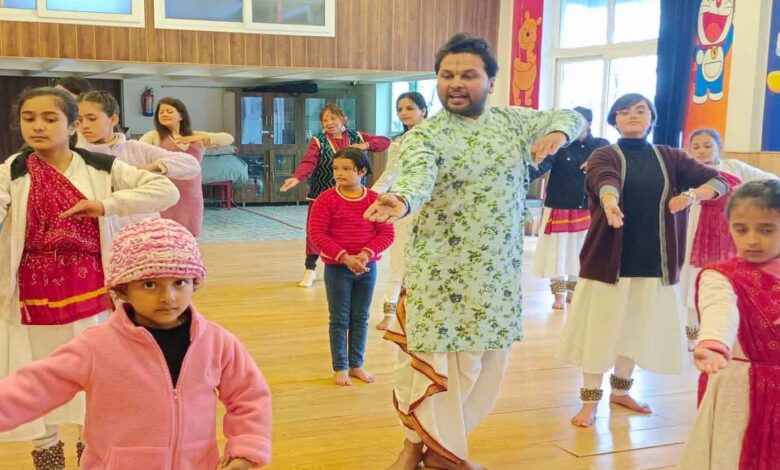
A young artist from Varanasi who has been practicing Kathak in Vrindavan for the past 10 years, Singh has recently arrived in Nainital. His aim is to connect the new generation of the hills with the rich tradition of Indian classical dance. For this, he started a free Kathak workshop which will continue till September 29 at the Vrindavan School in Tallital.
Singh was born in Kabirchaura, Varanasi. During a musical concert as a child, Kathak dancer Sarla Narayan Singh performed a Holi dance while holding him in her lap. He believes that perhaps that was the moment when the seeds of Kathak were sown in his life. As a child, he would dance during Kirtans held in temples though not everyone in his family approved of it. Despite his grandfather’s disapproval, his mother and grandmother supported him.
Following his growing interest in Kathak, Singh learned Kathak from Sangeeta Sinha, a disciple of Padma Vibhushan recipient Pandit Birju Maharaj, in Varanasi. He then completed his undergraduate and postgraduate studies in Kathak from Banaras Hindu University. He says, “Kathak is not just about the movement of feet and the sound of Ghungroos, but rather, it is about years of practice, discipline and dedication. The Kathak tradition originated from temples, reached royal courts, and then the modern stage,” he said.
Singh has performed Kathak in cities across the country, including Prayagraj, Mumbai, Pune, Kolkata and Lucknow. He has also performed his art abroad, including in China. He says that Kathak should not be limited to big cities and large stages. It is important to bring this art to the youth in remote areas of the country as well. So far, Singh has trained about 2,500 people in Kathak. The free workshop in Nainital is part of this objective. He says that if the younger generation learns and understands Indian classical dance, the Kathak tradition will continue to live on. For Singh, his spiritual practice is now more important than the glamour of the stage. He says that while performing on big stages was part of his journey, now pleasing Shri Radharaman with his art is the primary objective of his spiritual practice. This workshop in Nainital is another attempt to bring this spiritual practice to a new generation.