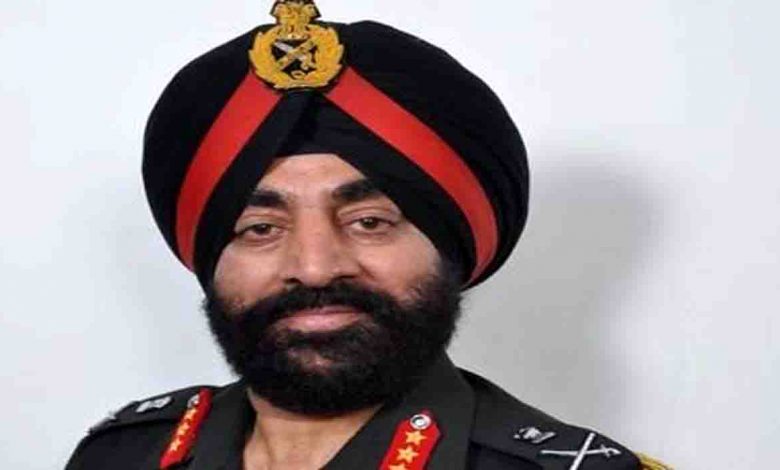
Lt Gen Singh new Governor of U’khand-BJP hits many targets with one arrow

Saturday, 11 September 2021 | PNS | Dehradun
By appointing former deputy chief of Indian Army, Lieutenant General (Retd) Gurmit Singh as the new governor of Uttarakhand the Narendra Modi government has tried to give a political message to the poll bound states of Uttarakhand and Punjab. The post of Governor of Uttarakhand fell vacant after the resignation of Baby Rani Maurya. A highly decorated army officer Lt Gen Singh who retired in the year 2016 after a career spanning more than thirty years is considered an expert on China and Kashmir.
It is a well known fact that ex-servicemen voters and their families constitute an influential vote bank which can tilt the scales in the favour of any party in the assembly elections. It is said that in Uttarakhand one person from every household is associated with the armed forces or para military forces.
A rough estimate put the number of armed forces veterans and Veer Naris (widows of armed forces personnel) at 1.80 lakh; similarly the state is home to about thirty five thousand retired paramilitary forces personnel. An estimated 1.50 lakh personnel belonging to the state are serving in different wings of the armed forces of the country.
The appointment of Singh is also directed to give a message to the Punjabi community which are in considerable numbers in many plain areas of Uttarakhand- Udham Singh Nagar and Dehradun.
It is pertinent to mention here that considering the importance of the ex servicemen voters, the Aam Aadmi Party (AAP) has declared Colonel (Retd) Ajay Kothiyal as its chief ministerial candidate. The appointment of Gen Singh is seen as a ploy to negate the Kothiyal factor.
Since Lt Gen Singh is from the Sikh community and belongs to Punjab, the union government has tried to create a feel good factor in the state where elections would be held early next year along with Uttar Pradesh and Uttarakhand. After parting ways with the Akali Dal the BJP would contest the Punjab assembly elections on its own.