

GUEST COLUMN
 AN Purohit
The growing use of the term “Gen Z” in India raises an important question- can a western idea of generations fully describe Indian society?
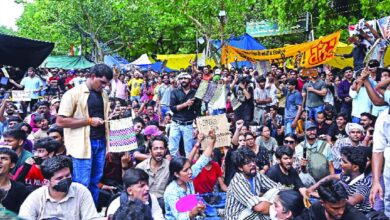
In recent public discussions, “Gen Z” has become common when talking about student protests, education, unemployment, technology and the aspirations of young people. Traditionally, Indians have used words such as Yuva, Naujawan and Yuva Peedhi.
The idea of generations is not new to India. Indian traditions have long used concepts such as Peedhi, Vansh, Kula, Gotra, Santati and Parampara. These ideas focus on family, ancestry, continuity, responsibility and the passing of values from one generation to another.
The western idea of generation
Western sociology generally defines a generation as people born around the same period who are influenced by similar historical events. Common labels include baby boomers, generation X, millennials, generation Z and generation alpha.
Thinkers such as Auguste Comte, Wilhelm Dilthey and Karl Mannheim helped develop the modern sociological understanding of generations. These labels can be useful for understanding broad changes in technology, work, politics and social behaviour. However, they can also be misleading because people born in the same period may have very different experiences. This is especially true in a diverse country like India.
The Indian understanding of generation
The traditional Indian view places greater emphasis on continuity rather than separation. The Indian idea of generation is closely connected with family, ancestry, tradition, cultural memory, duty and responsibility. The Ashram system—Brahmacharya, Grihastha, Vanaprastha and Sannyasa—also reflects the importance given to different stages of life, responsibility and continuity. The difference can therefore be expressed simply. The western approach asks: “How is this generation different from the previous one?” The traditional Indian approach asks: “What is being passed from one generation to the next?”
My own generation
I was born on July 30, 1940. According to the commonly used western classification, I would be placed in the silent generation (1928–1945). But does that label fully describe an Indian born in 1940? I believe it does not. My formative years included the final years of British rule, the freedom movement, Independence in 1947, the creation of the Republic and the early years of nation-building. These experiences were very different from those that shaped people belonging to the western “silent generation”. I would therefore describe my generation as an Indian independence-to-nation-building generation. This does not mean rejecting western sociology. It simply means that a generation must also be understood in its own historical and cultural setting.
Gen Z in India
The popularity of “Gen Z” in India is an example of globalisation. Indian young people today share many global experiences through smartphones, social media, digital entertainment and international communication.
At the same time, India is extremely diverse. Young people in villages and cities, in different regions and languages, and from different economic and educational backgrounds may have very different lives. Therefore, Gen Z is a useful label, but it cannot completely describe Indian youth.
Towards an Indian framework
India could also understand generations through major historical experiences, for example:
* Freedom-struggle generation – shaped by colonial rule and Independence.
* Nation-building generation – shaped by the early years of the Republic.
* Development generation – shaped by modernisation and the green revolution.
* Liberalisation generation – shaped by the economic reforms beginning in 1991.
* Digital generation – shaped by the internet, smartphones and social media.
These categories could complement western classifications rather than replace them.
Change and continuity
The western approach helps us understand technological change, new ideas, individual identity and changing social behavior. Its weakness is that broad labels can lead to stereotypes and unnecessary divisions between age groups.
The Indian approach emphasises family, cultural continuity, responsibility and connections between generations. Its strength is social connectedness, although it must also remain open to necessary change. The ideal future is therefore a balance- India can welcome technology and new ideas without losing its cultural roots. A new generation should not be seen simply as a replacement for the old one. It is a continuation of the past, while also bringing change.
Western thinking tends to define generations through age groups, historical events and differences between generations. The traditional Indian approach emphasises continuity, family, duty and the transmission of values. Both approaches have something to offer. For an Indian born in 1940, “silent generation” may be a convenient demographic label, but it cannot fully capture the experience of witnessing the end of colonial rule and the birth of independent India. My generation has its own historical identity and deserves to be understood in its own context. What is wrong with belonging to my own generation? Nothing.
An older generation has every right to think about and discuss Gen Z—not to control it, but to understand it. Every generation receives something from those who came before and leaves something for those who come after. Finally, why “Z”?
Since z is the last letter of the English alphabet, perhaps “N” for next or “F” for future would have been more hopeful. Let Gen Z not become the last generation. Every generation is a link between the past, the present and the future.
This is the thought behind what I wrote to my granddaughter, Anshi Purohit, who was born and brought up in the United States: “Life is like a tree. It remains a tree as long as it stays connected to its roots. When it is separated from its roots, it becomes wood that can be used for someone else’s purpose. Always remember this and never allow anyone to use you for their own purpose. You are not alone and never will be, provided you remain connected to the Indian way of thinking.”
The message is simple: modernity and tradition need not be enemies. We can move forward while remaining connected to our roots.
(A Padma Shri recipient, the author is the former vice chancellor of HNB Garhwal University; views expressed are personal)