

 Dr BKS Sanjay
Until we set a goal, one cannot achieve anything. Rashtriya Swayamsevak Sangh (RSS) was born with this motto — to contribute to nation-building and to serve the motherland. Today, the RSS is the largest voluntary organisation in the world. It was founded on Vijayadashami in 1925, which fell on September 25 that year.
The importance of Vijayadashami has been deeply etched in the Indian mind since ancient times. It signifies the victory of Maryada Purushottam Shri Ram’s army over Ravana’s army. The RSS was born in the backdrop of British rule and Gandhi’s philosophy. The organisation began with merely a dozen people under the guidance of Dr Keshav Baliram Hedgewar, and today it has grown to nearly five million members.
The ideology of RSS is based on discipline, dedication, sacrifice and renunciation. It provides physical, mental and spiritual training based on the Hindu philosophy. Leaders like Bal Gangadhar Tilak and Veer Savarkar greatly influenced Hedgewar and their thoughts are reflected in all activities of the RSS. There is no other organisation in the world of this scale and nature. The RSS has gone through many ups and downs, including being banned in 1927 by the British and again in 1948, 1975, and 1992 by the Government of India. Despite these challenges, the Sangh has grown into a powerful organisation, contributing significantly to national rejuvenation.
It has over 50 subsidiary organisations that are active not only across India but also around the world. It is a non-political, socio-cultural organisation that has influenced Indian politics. It has voiced its opinion on all major issues like India’s partition, the JP Movement, Mandal Commission agitation, Babri Masjid demolition and Ram Mandir construction, among others.
Change is a universal truth and India is no exception. Back in 1925, who would have thought that RSS would be the cause and means of national change in the years to come? This became evident in 1996, when a swayamsevak became Prime Minister of the country, initially with a minority in Parliament and later with a full majority. Since then, tremendous changes have taken place in the social and political scenario of the nation. RSS is not confined to one place, community or area. It has reached every nook and corner of the country, as reflected in the presence of its many thousands of shakhas across the world. Whether it was the duo of former Prime Minister Vajpayee and Home Minister Lal Krishna Advani or the current Prime Minister Narendra Modi and Home Minister Amit Shah — all of them have grown up under the influence of Sangh. RSS is actively involved in socio-cultural reform as well as rehabilitation efforts during natural and man-made disasters — be it during India’s partition, the Mandal Commission protests, or the anti-Sikh riots in Delhi, Kashmir flood etc.
According to the current Sarsanghchalak Mohan Bhagwat, RSS is working on the character-building of Indian youth. Its goals are to preserve Indian culture and to serve the motherland with a selfless motive. He believes that individual and societal development can go hand in hand, paving the way for collective progress and prosperity. The organisation is dedicated to shaping individuals, who in turn are responsible for building society and the nation. Renunciation and sacrifice are the roots of RSS’ strength, power and invincibility. Only love born out of sacrifice can inspire us to serve our fellow citizens.
RSS was born out of compassion and adopts a humanistic approach in all its activities. Swayamsevaks believe in the concept of unity in diversity, while always keeping nationalism in mind. For every volunteer, the nation comes first. RSS is a self-supported organisation, financially sustained by voluntary contributions from swayamsevaks. Donations are collected annually during Guru Purnima, in the form of Guru Dakshina, meaning an offering to the Guru that falls on full moon day (Purnima) of the Ashadha month (June/July) in the Hindu calendar. As of today, with nearly five million members, these contributions fund all of RSS’ activities. These include healthcare, education for the underprivileged, cultural preservation, promotion and disaster relief efforts. Unlike most organisations that place importance on individuals, RSS does not revere any individual or mythical figure. Instead, it considers the Bhagwa Dhwaj (saffron flag) to be the eternal Guru. Humans are mortal and flawed, but the flag is pure like the truth. I salute the Bhagwa Dhwaj.The Bhagwa Dhwaj, or saffron flag, is considered the Guru of all swayamsevaks. The saffron colour signifies renunciation, reminding all to remain detached from material gains and dedicate themselves to service.
The colour is so sacred that it is part of our national flag, the Tiranga. RSS does not require any membership form or fee. Any male above 18 can join the Sangh — even if he holds differing views — as long as he is dedicated to serving the motherland. The daily rituals of RSS are unique and emphasise physical fitness and mental discipline. The core aim is to install nationalism in the hearts and minds of all swayamsevaks.
The ideological focus of RSS is on the nation, not on any individual. It continues to play an important role in nation-building. Hedgewar believed that every child of Bharatavarsha is a potential Vivekananda or Tilak. RSS strives to unfold this potential in every son and daughter of India. It is an uphill task and a revolutionary idea. Looking at the current scenario, the many former and current swayamsevaks like Sarsanghchalak Mohan Bhagwat and Prime Minister Narendra Modi have made the vision of the founders of the Sangh a reality.
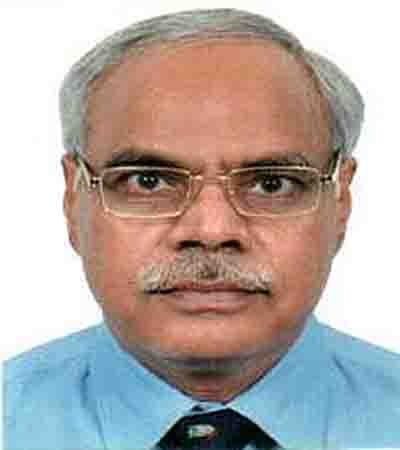
(A Padma Shri recipient orthopaedic surgeon, the author is also the president of AIIMS Guwahati; views expressed are personal)