

PIONEER EDGE NEWS SERVICE
As 2025 draws to a close, trend-watchers looking back at the year’s defining shifts in India’s gig economy will notice something distinct. It was not just the accelerated transition to electric vehicles or the deepening penetration of digital payments in Tier-3 towns. The most striking visual change on Indian roads this year has been demographic. A space that was once a monolith of male dominance is finally cracking open.
In India’s chaotic traffic, a subtle yet significant shift is underway. Look closely at the rider weaving through the gridlock in Jaipur, or the captain picking up a passenger in Guwahati. Under the helmet, you are increasingly likely to find a woman.
For years, the mobility sector in India, driving autos, taxis and buses has been an exclusively male fortress. Cultural stigma, safety concerns and lack of infrastructure kept women off the road. But Rapido is dismantling these barriers, one ride at a time.
Today, 35 per cent of Rapido’s captain base comprises women, marking a historic shift in the demographics of Indian transport. This is not a token diversity initiative; it is a fundamental restructuring of who can move India. Through its Pink Mobility initiative, Rapido is building a safer, more inclusive ecosystem, by women, for women across the country.
The context for this shift is critical. India has one of the lowest rates of female formal workforce participation in the world. Millions of women are locked out of the economy because traditional 9-to-5 jobs offer no flexibility for childcare or domestic responsibilities.
Rapido offers a solution that fits the messy reality of women’s lives. It provides a dignified livelihood pathway with flexible hours and self-driven earning potential. A mother can drop her children off at school, serve as a captain for four hours, earn a substantial income and be home by afternoon. There is no boss, no fixed shift and importantly, strong field support to handle any issues on the road.
The impact of this initiative goes beyond economics; it also addresses the pervasive issue of safety. Women captains are powering a new mobility narrative. Female riders who often feel unsafe taking bike taxis or cabs are now choosing women captains. This amplifies trust, safety and independence for both parties. However, this specific initiative rests on a broader foundation. To ensure that women, both captains and passengers, feel secure, the platform relies on a universal safety architecture designed for the realities of Indian commuting.
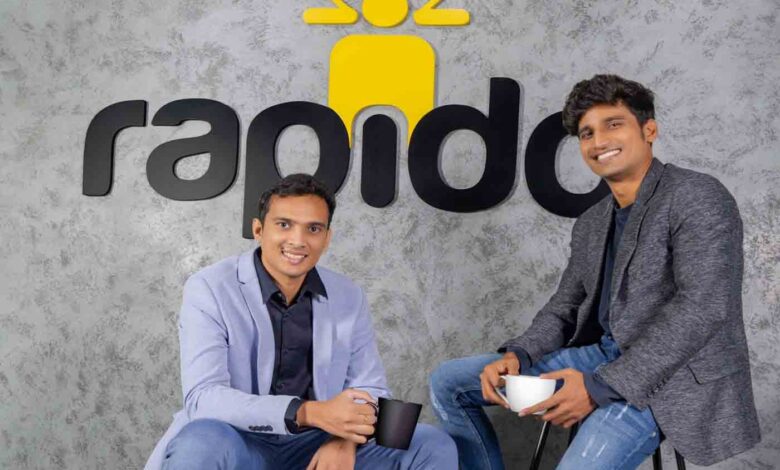
Rapido co-founder, Pavan Guntupalli explains how this core infrastructure supports every ride: “Our safety model aligns closely with both regulator expectations and real rider behaviour. India’s mobility demand is dominated by short and mid-distance trips, and our platform is designed for safe, high-frequency, first- and last-mile movement. From behaviour monitoring and instant reporting tools to stringent redressal mechanisms, every feature reinforces accountability. We want mobility to feel as safe as it is accessible.”
With this robust safety net in place, Rapido has been able to focus on structural inclusion. As another Rapido co-founder, Aravind Sanka explains, “Women have been structurally excluded from the mobility workforce and Rapido is changing that with intention and scale. Through The Bike Pink initiative and our women-for-women categories, we now have over 10,000 active women captains in Chennai alone, many of whom are earning steady incomes for the first time, often exceeding INR 200 per hour.”
This is perhaps one of India’s most significant grassroots efforts to create sustainable income opportunities for women. In Tier 2 cities, where social conservatism is often stronger, Rapido’s women captains are quiet revolutionaries. They are breaking the stereotype that ‘driving is a man’s job’.
“With unlimited safety-led cancellations, 24×7 emergency support, licence training, and partnerships with 25+ women-focused NGOs, we are building one of India’s largest women-led mobility networks,” added Aravind Sanka.
Rapido helps create the conditions for ‘financial independence’, independence that opens doors for women who may be facing abuse at home to consider leaving unsafe environments. It empowers widows who might otherwise feel compelled to rely on relatives, allowing them instead to put on a helmet, ride a scooter, and support their families with dignity. By offering flexible earning opportunities, Rapido doesn’t prescribe choices; it simply expands what is possible. These women are not just drivers; they are carriers of a new social contract in mobility.
Rapido’s commitment to women’s empowerment is reshaping the streets of India. It is enhancing safety, comfort and accessibility for women commuters while providing a lifeline to women seeking financial autonomy. As the pink helmets multiply at traffic signals across the country, they signal a change far greater than just transport, they signal freedom.