
VIEWPOINT
 ROMIT BAGCHI
A question nagged me for quite a long time: why do people love to resent those who have dared rise above their peers? Things may be explained in terms of what we call crab mentality. This coinage came from the observation of living crabs in a bucket. Whenever one crab tries to claw its way to the top, attempting to climb out and escape, the others pull it back down, ensuring that no one of the pack escapes the trap. Applied to humans, this is an individual and social behavioral phenomenon, almost universal. Although we condemn this as a weakness, this is present in all of us in a lesser or greater measure.
But how can we explain things when we see the same in those who are themselves great? Tall Poppy Syndrome? What is it? Simple enough. To cut down the tall poppy so that they become level with everyone else. Is this a law of nature? But it does not seem to be so, for if it were true, humanity would have got stuck in the vegetative average mediocrity, shorn of progress: individual and collective. Nevertheless, this syndrome is a powerful social and psychological reality.
Before getting into the main part of this write-up, I must say a few words about Nirad C Chaudhuri. No other writer, in my view, has held up a mirror to the collective character of Indians, in general, and Bengalis, in particular, as he has done, looking beyond the individual idiosyncrasies to examine the ingrained habits of the society while revealing the tension between the lofty ideals espoused and the uncomfortable realities internalised. Let me quote him.
“Compared with this regimentation of envy, its individual manifestations are a minor evil, which it is always possible for a resolute person to overcome. But the united cohort of the highest in India are very much like the old Greek god Kronos, who castrated his father and swallowed his own children to prevent the emergence of rivals…They can also be compared to Kamsa…”
What comes next is even more caustic. “Another question which has to be answered is whether any particular group of people or any particular region in India shows more envy than the rest. On this, opinions will naturally differ. From my experience of Bengali life, I would, however, say that it seems to me that a Bengali, that my fellow Bengalis have the failing in its lowest form, besides having it in the largest measure. This is not my opinion alone but that of many great and famous Bengalis.”
This observation, though extremely scathing, cannot be dismissed outright as an acerbic exaggeration. Almost all the icons of the renascent Bengal fell prey to invectives flung at them by those who were quite well-known and widely respected figures of their time.
As a matter of fact, the shrill campaign of the recently concluded Bengal polls made me dig into this matter. Those in the vanguard of the campaign-particularly those who banked on Bengal’s cultural sensitivities-kept invoking the Bengali icons to resonate with the culture-proud populace. There was nothing wrong in it; it was their compulsion.
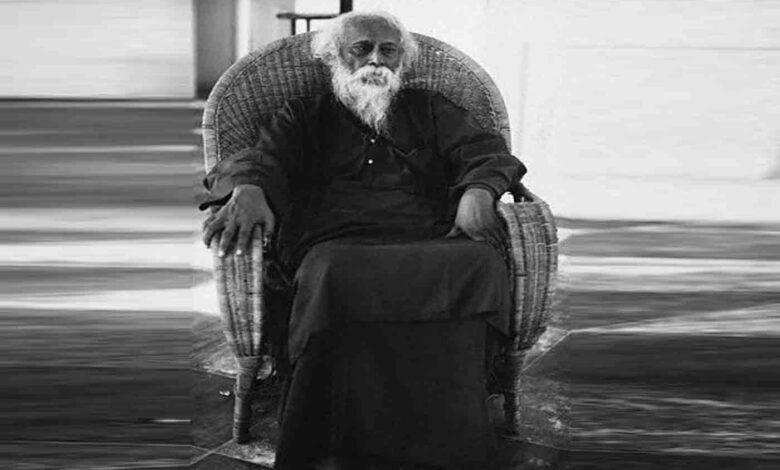
But curiously, they suffered a lot in the hands of their fellow Bengalis while alive. The list is quite long: from Raja Rammohun Roy, Ishwar Chandra Vidyasagar and Bankim Chandra Chatterjee to Rabindranath Tagore, Swami Vivekananda, Sri Aurobindo, Subhas Chandra Bose and Syama Prasad Mookerjee. I will, however, focus here on Tagore alone.
“Tagore died without being reconciled to fellow Bengalis, and with the implacable resentment of an unjustly treated child against those Bengalis who maligned him, and who were the only Bengalis whose existence was real to him. The rest, with the exception of those who fawned on him and whom he could not respect, did not exist for him for any purpose that mattered,” wrote Chaudhuri.
Tagore was so hurt by the animus hurled at him that he regretted his recovery from a serious illness. In a letter written in 1930, he noted that the people of his country could not forgive until the pulse had completely ceased to beat. “But such is my misfortune that Yama sends his messenger, and never his chariot. So those who would have sent forth lamentations at memorial meetings will continue to vituperate at literary conferences.”
He was appalled when doubts were cast on whether he had himself translated some from his anthology of prose poems known as Gitanjali, which fetched him the Nobel Prize. “There was a question in your letter whether I have engaged paid agents to spread my name. This sort of suspicion is possible only in Bengal. It is here that people whisper that I have won the Nobel Prize by a subtle trick and the English compositions of mine, which have gained fame, were written by a certain Englishman.”
That is not all. “I have almost brought to its end the span of life in my Bengali birth. And the last prayer of my tired life is that if there be rebirth, may I not be born in Bengal again. Let only the virtuous perform their marvels in this land of virtue. I am an outcaste and so let my lot be cast along those whose conduct does not conform to the Shastras, but whose judgment is consistent with Dharma.”
Undeniably, Bengal has produced individuals who personify the very acme of perfection in myriad of fields ranging from literature, music, painting and movie-making to national awakening and nation-building, while a few of them attained the summit of spiritual realisation. But the habit of apotheosizing those whom they maligned, ridiculed and lampooned during their lives is also an undeniable fact of the collective Bengali psyche. These paradoxes signify the deep complexity inherent in the Bengali psyche. Possessing abundant emotional and dynamic energies, they have astounding potential as well as notable psychological weaknesses. They may tower over contemporaries, dwarfing them into insignificance, by the proper use of their potential, or they may burn out quickly due to their envy-fuelled inability to stay grounded and remain absorbed in their swadharma.
But why are the greats made to suffer? We know the answer. Suffering prepares them for greatness, chisels greatness, tests greatness and pushes them into the inner part of themselves, which remains untouched by their outer life’s suffering. The more intense their suffering, the greater they grow.
Is it Divine Irony? It is, if we accept that the higher powers engineer events so that the exact opposite of what the humans intend for the great actually happens. If so, this tradition of disparaging the greats will continue, for this is how Nature seems to work to sculpt greatness in life. “Love lashing with hurt in life’s combat to pour eternal bliss is yours,” Tagore himself says about Divine Love.
This is a riddle of the life we live. It seems we do not know how things work, for our life is governed by a far greater Truth than we, the humans, can comprehend. This Truth seems to be playing a mysterious game with life-“embracing all, hidden among all”- for a purpose, inscrutable and incomprehensible.