
When Forest Waste Became a Renewable Resource: Pantnagar’s Engineering Solution to a Himalayan Challenge

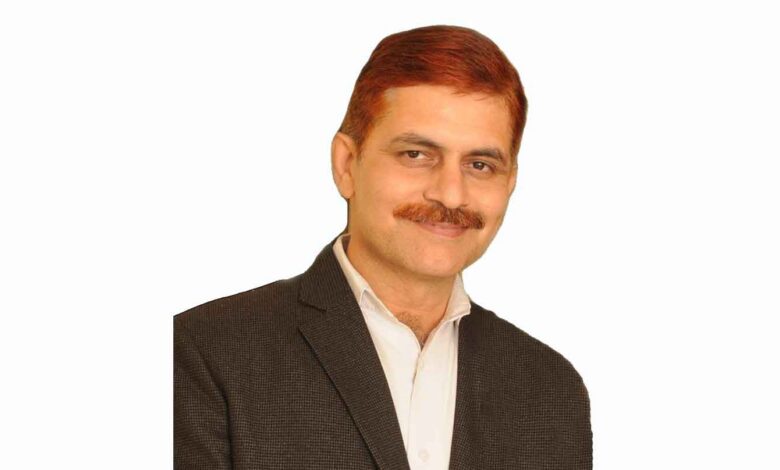
By Prof Shivendra Kumar Kashyap, Vice Chancellor, G.B. Pant University of Agriculture and Technology
“Every challenge in nature presents an opportunity for scientific innovation.” This philosophy has shaped the research culture of Govind Ballabh Pant University of Agriculture and Technology, Pantnagar for more than six decades. Established in 1960 as India’s first agricultural university on the Land-Grant model, GBPUAT transformed the nation’s agricultural landscape through the Green Revolution and has since emerged as a centre of excellence in agricultural engineering, renewable energy and sustainable technologies. Today, under the leadership of the Vice-Chancellor, Prof Shivendra Kumar Kashyap, the university continues to strengthen its legacy through interdisciplinary research and innovation that addresses national and global challenges.
Every year, with the onset of summer, thousands of hectares are affected by pine forest fires. Thick layers of dry chir pine (Pinus roxburghii) needles accumulate on the forest floor, creating highly combustible conditions that trigger devastating forest fires. These fires not only destroy biodiversity and wildlife habitats but also release large quantities of greenhouse gases, degrade soil quality and threaten the livelihoods of mountain communities. For decades, pine needles were viewed merely as an unavoidable environmental burden.
Researchers at Pantnagar saw the problem differently. Instead of asking how to dispose of pine needles, they asked a more fundamental scientific question: Can this forest waste become a source of clean energy?
Driven by this vision, the College of Technology gradually evolved its research from conventional renewable energy systems to advanced biomass conversion technologies. Beginning in the early 2000s, the department strengthened its work on biogas technology and decentralized rural energy systems, focusing on the efficient utilisation of agricultural residues. As India’s emphasis on sustainable energy grew, the research expanded to include the enormous untapped biomass resources available in the Himalayan region.
Under the leadership of Prof T K Bhattacharya, the research team investigated the thermochemical conversion of pine needles through pyrolysis. Their studies demonstrated that a material responsible for seasonal forest fires could be converted into bio-oil, biochar and combustible gases-renewable energy products with the potential to reduce dependence on fossil fuels. The work represented a shift in thinking: forest litter was no longer treated as waste but as a valuable biomass resource within a circular economy.
The research did not stop at proving the concept. Between 2014 and 2020, advanced optimization techniques such as Response Surface Methodology (RSM) were employed to improve bio-oil yield and process efficiency. Parallel investigations on pine needle briquetting produced dense biomass briquettes with superior energy density, combustion efficiency and storage characteristics, making transportation and utilisation of forest biomass technically feasible. These engineering innovations addressed two challenges simultaneously-renewable energy production and reduction of forest-fire fuel loads.
The scientific outcomes extended well beyond laboratory experimentation. The technologies developed at Pantnagar provided practical pathways for utilising forest residues, promoting rural entrepreneurship, reducing environmental pollution, and supporting India’s transition towards a circular bioeconomy. The research also strengthened the understanding of biomass conversion processes, contributing valuable scientific knowledge to the fields of renewable energy and agricultural engineering.
While biomass utilisation became a defining area of research, the Department simultaneously advanced work in biogas technology, energy-efficient farm machinery, tractor fuel economy and agricultural mechanisation, ensuring that engineering innovations directly benefited farming communities. Technical manuals, extension bulletins and practical training programmes further translated research findings into technologies that could be adopted by students, engineers, entrepreneurs, and farmers.
The scientific excellence of this programme received national recognition through awards from the Institution of Engineers (India) and the Indian Society of Agricultural Engineers. These achievements were made possible through the sustained leadership of Prof T K Bhattacharya, whose research and mentorship helped establish Pantnagar as an important centre for biomass and renewable energy engineering.Today, as climate change intensifies and the demand for clean energy continues to rise, the story of pine needles at Pantnagar reminds us that innovation often begins with a simple question. Instead of asking, “How do we remove it? theresearchers asked, “How can we transform it? The answer emerged through years of scientific research, converting an ecological challenge into a sustainable energy solution. In doing so, GBPUAT Pantnagar not only advanced renewable energy research but also reaffirmed its enduring commitment to science in the service of society.