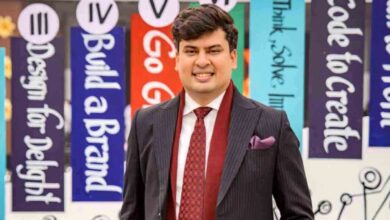
Succession is not a title change: Girjesh Rungta on what really makes family businesses last


ABOUT RUNGTA’S TEA
Founded in 2001, Rungta’s Tea has grown into one of North and East India’s most trusted regional tea brands, now operating across eight states, including West Bengal, Bihar, Jharkhand, Uttar Pradesh, Uttarakhand, Rajasthan and Delhi NCR. Built on a 25-year foundation of quality sourcing, proprietary blending expertise, and a distribution network sustained by a 92 per cent partner retention rate over two decades, the brand has consistently chosen depth over speed in every market it has entered. Its portfolio spans Real Gold, Real Gold Classic, Real Gold Select, Real Taste, Rungta’s Roz and Dhamaka, serving consumers across price points without compromise on taste or consistency.
ABOUT GIRJESH RUNGTA
Girjesh Rungta is the founder and managing director of Rungta Tea Private Limited, with over four decades of experience in India’s FMCG and tea sector. His career began in distribution, giving him an unusually grounded understanding of how supply chains, trade relationships and consumer trust actually function at the ground level. Under his leadership, Rungta’s Tea has grown from a single-city operation into a multi-state brand built on the principles of quality, commitment and relationships. A respected voice on regional brand-building, distribution strategy and family business governance, he brings a practitioner’s perspective to conversations about how Indian enterprises grow sustainably across generations.
Excerpts from an interview with Girjesh Rungta
Recent research suggests that most family business patriarchs in India struggle to relinquish control even in their sixties. From your experience, why do you think letting go remains one of the hardest things for a founder to do?
Because for most founders, the business is not just a professional identity, it is a personal one. You have built it from nothing, every decision has your fingerprint on it, and over time it becomes difficult to separate what the business needs from what you feel comfortable with. Letting go is not really about trust in the next person. It is about redefining your own role and finding meaning in a different kind of contribution. That is a genuinely difficult shift and I think it is important that we speak about it honestly rather than pretend it is straightforward.
Succession is often treated as a transaction – a title change, a board reshuffle. What does genuine, well-executed succession actually look like in a family business context?
It looks like a gradual transfer of both responsibility and confidence and not just authority on paper. A title change means very little if every significant decision still runs through the previous generation. Genuine succession means the incoming leader is allowed to make calls, including ones the founder might have made differently, and learns from that experience. It also means the outgoing generation finds a meaningful role in governance and values-setting rather than operations. That transition takes time and it requires honesty from both sides about where the boundaries actually are.
The next generation in family businesses is increasingly being described as disengaged or preferring to manage investments over running operations. Do you think that perception is fair and what does it tell us about how family businesses are preparing their successors?
I think the perception is sometimes fair and sometimes a projection. Where it is fair, it often reflects a preparation failure rather than a motivation failure. If the next generation grows up watching a business where every decision rests with one person, they may never develop the hunger or the confidence to take it on themselves. The question family businesses should be asking is not whether the next generation is interested, it is whether they have been given genuine ownership of anything meaningful early enough to develop that interest. Disengagement is rarely the starting point. It is usually the result of something else.
Family businesses in India are often criticised for being too informal in their governance. But informality also creates agility and trust. Where do you think the line is between healthy informality and a structural risk?
The line is crossed when informality becomes an excuse for avoiding difficult conversations. In a family business, relationships and trust are genuine strengths, they enable faster decisions, deeper loyalty and a quality of commitment that is hard to replicate in a purely professional structure. But when governance is informal to the point where roles are unclear, accountability is assumed rather than defined, and there is no process for resolving disagreement, that is when the same informality that built the business starts to threaten it. Structure does not have to mean bureaucracy. It means clarity – about who decides what and how.
Some of India’s most enduring businesses are family-run. What is it about the family business model that creates staying power that purely professionally run companies sometimes lack?
Long-term thinking. A professionally managed company is often accountable to quarterly results, investor cycles and short-term metrics. A family business, at its best, is accountable to something longer – a reputation, a community, a name that carries across generations. That changes how decisions get made. You are less likely to cut corners on quality when your name is on the product. You are more likely to invest in a relationship that will not pay off for three years. That orientation towards durability over efficiency is, I believe, one of the most undervalued competitive advantages a family business carries.
If Indian family businesses were to do one thing differently to ensure they thrive across generations, what would your advice be?
Institutionalise the values before you institutionalise the processes. Most family businesses eventually bring in professional systems–ERP, HR policies and structured governance. That is necessary and right. But what gets lost in that transition, if you are not careful, is the culture that made the business worth systemising in the first place. The relationships, the quality standards, the way you treat people in the network. My advice would be to spend as much time articulating and embedding those values as you do, building the operational structure around them. Systems can be copied however, culture cannot.