

PNS/ UTTARKASHI
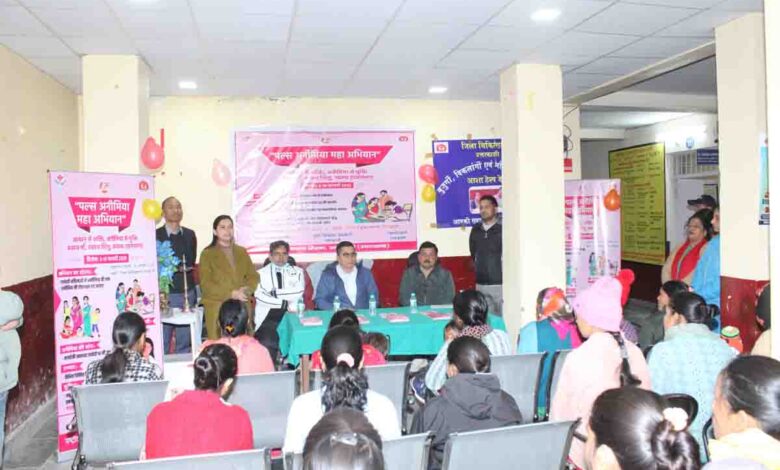
Under the ‘Anaemia Mukt Bharat’ programme, Pulse Anaemia Maha Abhiyan was launched across Uttarkashi district on Monday. It will continue till February 10. While inaugurating it at the district hospital, the district magistrate Meherban Singh Bisht urged the health workers to work with commitment to make the campaign a success. He also asked the
pregnant women to consume food items rich in iron and vitamin B such as green leafy vegetables, eggs, pulses and whole grains to prevent anaemia. Further, he directed the chief medical officer (CMO) and other health workers to ensure that sufficient numbers of haemoglobin meters along with essential life-saving medicines are stocked in all medical units.
Speaking on the occasion, the CMO Dr B S Rawat informed that during the campaign, the haemoglobin level of all registered pregnant women would be tested. If the level was found low they would be given an injection of iron sucrose under the supervision of doctors at the district hospital, community health centres and primary health centres, he said, adding that till date, 4742 pregnant women had been registered in the district whose haemoglobin levels would be tested during the campaign.