
Study highlights effectiveness of wildlife mitigation measures on Delhi–Dehradun economic corridor

PIONEER EDGE NEWS SERVICE/Dehradun
Showcasing successful sustainable and inclusive development of National Highway projects in ecologically sensitive areas, National Highways Authority of India (NHAI) in collaboration with the Wildlife Institute of India (WII) released a report titled ‘Landscapes Reconnected’. The extensive WII report documents the first evidence of wildlife using animal underpasses on the Delhi – Dehradun economic corridor.
Conducted along an 18-kilometre stretch of the economic corridor between Ganeshpur and Asharodi, the study was undertaken with the objective of assessing patterns of underpass use by wildlife, factors affecting usage of underpasses by different species and effectiveness of the underpasses. This forest region is habitat to some of the endangered species such as tigers, elephants, greater hornbills and king cobras. The 20 -kilometre stretch between Ganeshpur and Asharodi features a total of 10.97-kilometre long animal underpass designed specifically to facilitate unobstructed animal movement.
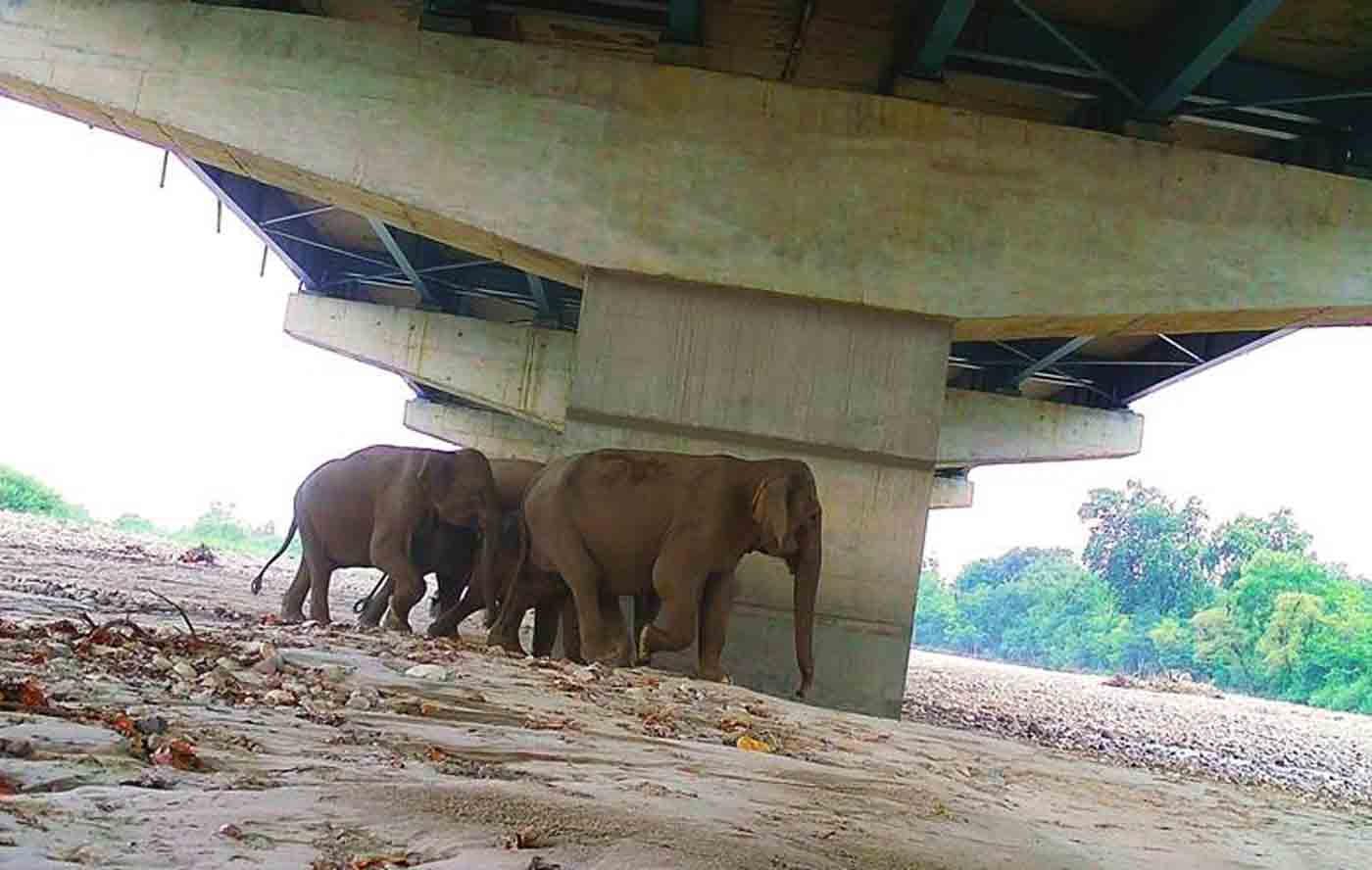
According to officials, the area of study was strategically divided into three distinct zones. The study methodology included a rigorous 40-day monitoring programme utilising 150 high-tech camera traps and 29 AudioMoth acoustic recorders deployed along the Delhi – Dehradun economic corridor. The study documented a total of 1, 11, 234 images of humans, domestic animals and wildlife. Among these, 40,444 were attributed to 18 unique wildlife species utilising the underpass, including various carnivores, herbivores, ungulates, pheasants and primates. The golden jackal was the most frequently captured, followed closely by Nilgai, Sambar and spotted deer. Smaller mammals, including the Indian hare also showed consistent movement through the structures. Notably, the study also recorded 60 instances of the elephants safely utilising the corridors, establishing that even the largest wild animals can navigate the new infrastructure to maintain their natural migration patterns.
The research identified the strategic management of the soundscape as a primary factor in facilitating natural wildlife behaviour beneath the corridor. The data indicate that while generalist species, such as golden jackals and wild boar, have habituated to significant traffic sound, sensitive species like elephants and spotted deer selectively utilise underpass segments with lower sound levels. Deployment of advanced noise reduction strategies including targeted sound barriers in high-frequency crossing areas will further enhance passage for noise-sensitive species.
The development of Delhi – Dehradun economic corridor has not only significantly reduced the probability of human–wildlife conflict but also mitigated the risk of population isolation in the Shivalik landscape. The study reaffirms that well-planned infrastructure interventions, including underpasses and elevated corridors, play a crucial role in preserving the natural habitat of the wild animals and maintaining ecological connectivity, officials added.