
PIONEER EDGE NEWS SERVICE/ Bageshwar
Long before tourists flocked to Uttarakhand for quiet mountain holidays, Kumaon found a sweeter way to be remembered: a small box of Bal Mithai.
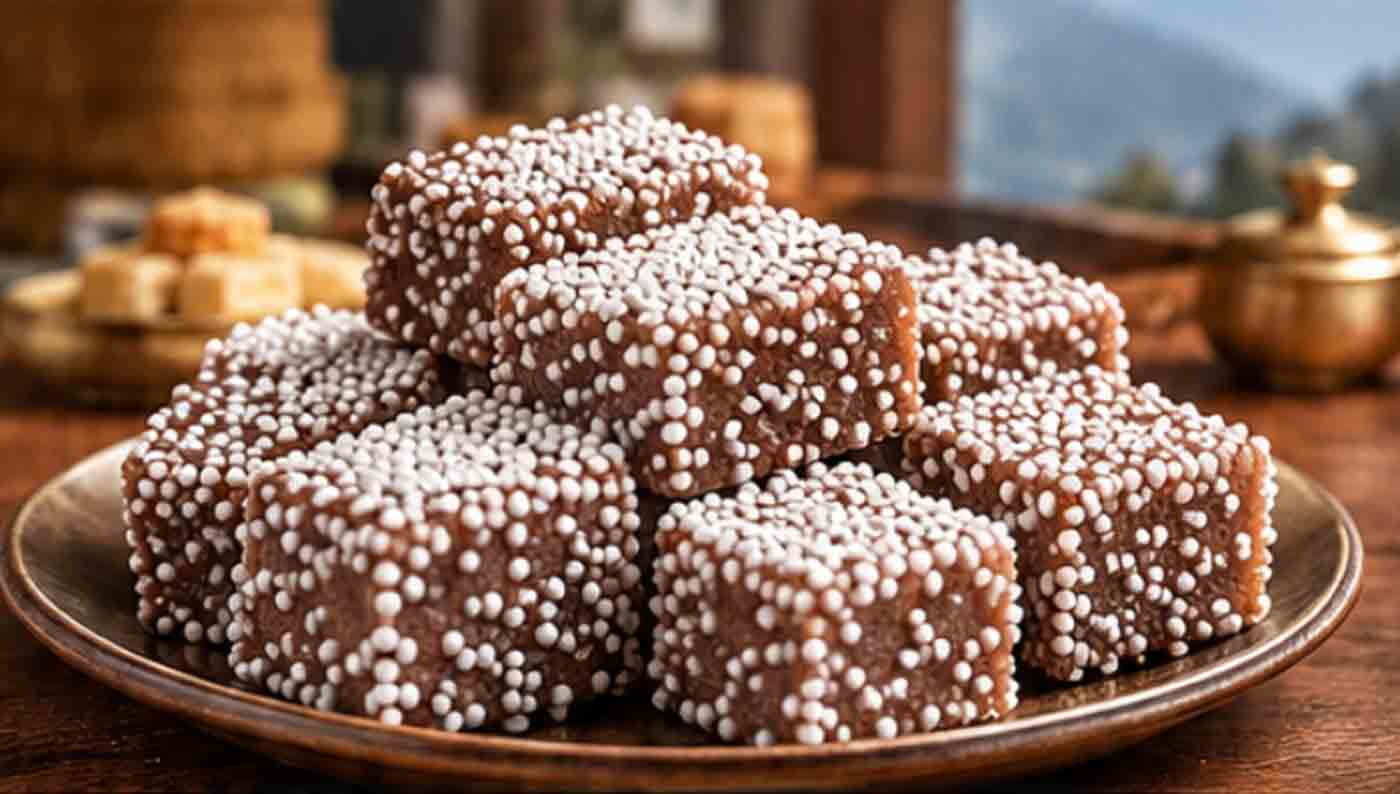
Dark brown in colour and topped with tiny white sugar balls, Bal Mithai has a distinctive appearance that is difficult to confuse with any other sweet. Crafted from a simple base of khoya and sugar, this traditional Kumaoni delicacy has stood the test of time.
But its story is not simply about taste. For people in Kumaon, Bal Mithai is closely connected with home, family and local tradition. It is bought for festivals and special occasions, offered to guests and often carried by travellers, returning from the hills, to relatives and friends across the country.
In the traditional sweet shops of Kumaon, preparing Bal Mithai has been a skill passed from one generation to another. The ingredients are simple, but achieving its familiar taste, texture and colour requires experience and patience.
Over the years, the sweet has evolved into its uniqueness and also found a place in Uttarakhand’s tourism economy. Visitors looking for something distinctly local often take Bal Mithai back with them. It has, in effect, become a culinary souvenir of Kumaon standing in a class by itself.
That popularity is significant at a time when many traditional foods are fading out thanks to changing tastes and mass-produced alternatives. Packaged sweets and modern confectionery products are easily available, while traditional makers have to grapple with rising costs, fast-changing consumer preferences and the need for better packaging and wider markets.
The challenge, therefore, is not simply to preserve Bal Mithai as an old recipe. It is to keep the tradition commercially viable while retaining the qualities that make the sweet distinctly Kumaoni, experts aver, adding that tourism can also play a key role by linking local food more closely with the experience of visiting the hills.
“Food is often one of the simplest ways to understand a place. Uttarakhand is widely known for its mountains, forests, temples and folk traditions. Its traditional cuisine tells another part of the story—one rooted in local ingredients, family practices and generations of knowledge,” commented a culinary tourism expert.
For an outsider, it may begin as a box of sweets picked up on the way home. For a Kumaoni, however, it can evoke a familiar shop, a family occasion or the memory of their roots embedded in the hills.
A well-known Bal Mithai maker from Almora, Khimda Mohanda believes that preserving the sweet is also about preserving the identity associated with it. “Our generation, along with the generations to come, must know this tradition and understand why it has survived for decades, remaining a beloved treat for generations,” he says.
His words underline a larger point: traditional foods survive not merely because people continue to taste, enjoy and appreciate them, but because communities continue to value the stories, skills and cultural identity behind them.
This may explain the enduring appeal of Bal Mithai, a treat whose simple sweetness belies a deeply complex tradition.