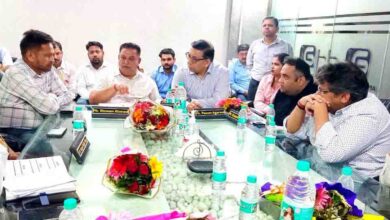


PIONEER EDGE NEWS SERVICE/Dehradun
Uttarakhand Jal Sansthan (UJS) has heightened alert regarding maintenance of quality drinking water in the wake of the recent water contamination incident in Indore which resulted in the death of about 15 people, mostly children.
While expressing concern over the Indore water tragedy, the secretary (Appraisal) at UJS, Maneesh Semwal said that poor water quality could be of two categories: the first category involves already contaminated water and the second category involves water coming from unnatural sources. “In the second category cases, though the water being supplied is good it may become contaminated while passing through contaminated sewer lines. As far as Uttarakhand is concerned, the first category does not apply while the second category issue is a possibility,” Semwal said.
He stated that when complaints about water quality arise, the officials concerned first halt water supply in that area, then collect samples from the specific location, identify the fault and ensure it is rectified. “The districts like Dehradun, Haridwar and Nainital find it challenging to address water quality complaints due to traffic and other logistical issues, especially compared to other districts,” he observed.
Semwal further said that in the light of the recent incident, UJS has issued directives to officials regarding the regular maintenance of drinking water quality. “Each day, before opening the drinking water supply, it is crucial to inspect all reservoirs involved in the drinking water scheme. Officials must obtain a certificate from the concerned personnel (junior engineer/assistant engineer) confirming that the upper lid of the reservoir has been opened, inspected and found to be clean with no need for cleaning at that time. If cleaning is necessary, the drinking water supply should be halted immediately and the reservoir must be cleaned as a top priority. Alternative arrangements will be made to ensure a smooth drinking water supply during this process,” he said.
Further, the JEs and AEs should identify various locations within the main water distribution system to collect drinking water samples for quality testing, he said, adding that this will enable quick identification of which parts of the scheme have adequate chlorination levels and which do not meet the prescribed standards. “Drinking water samples should undergo FRC with reports co-signed by the officers concerned,” he said.
Semwal said that other directives include a requirement for branch officers to regularly inspect chlorination plants and ensure that the equipment is functioning properly and that chlorination is performed consistently.
“While the superintending engineer should monitor the arrangements for chlorination and testing of drinking water samples diligently the officials concerned should take immediate cognisance of daily FRC tests conducted by the department, joint FRC tests with the Health department, chemical/molecular tests by departmental labs and test reports from other agencies. All these should be recorded in a register. If chlorination is found lacking during inspections by higher officials, responsibility for the failure will rest with the officers concerned,” he noted.