
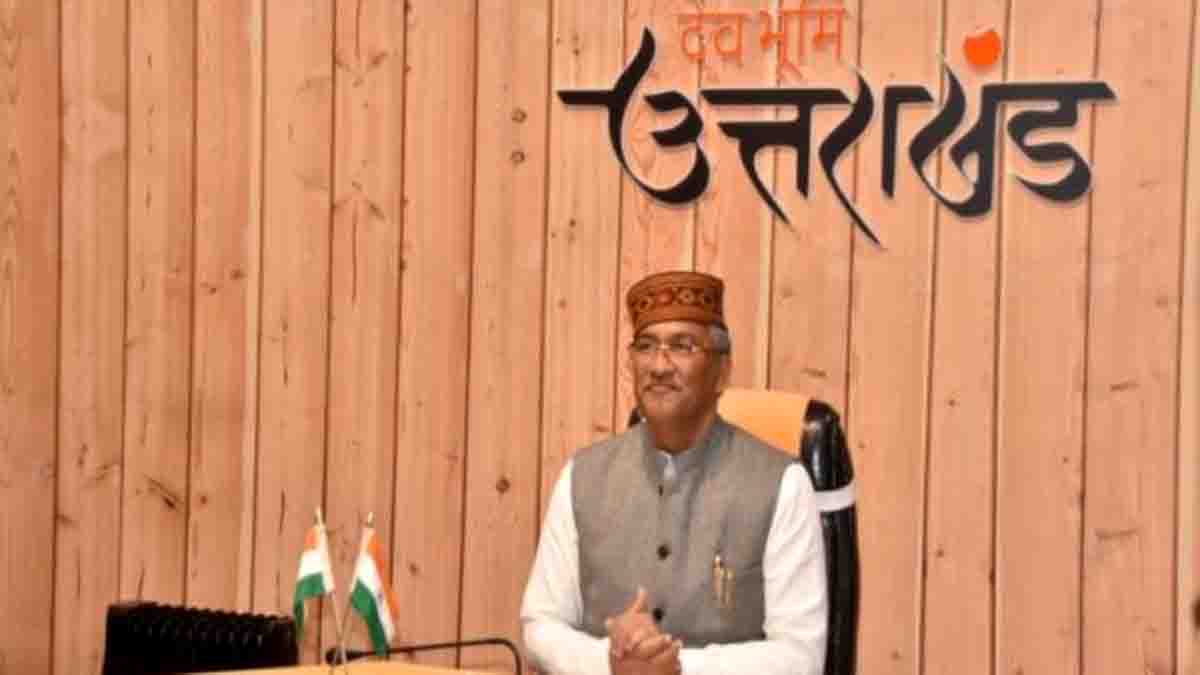
The union budget 2021-22 is a very inclusive budget delivered amidst adverse conditions, said the chief minister Trivendra Singh Rawat. Sharing his views on the budget with the media on Monday, the CM thanked the Prime Minister Narendra Modi and Union Finance minister Nirmala Sitharaman, adding that the strong determination of the PM is visible in the budget.
Rawat said, “Based on six main columns- this budget focuses on development of basic infrastructure, employment generation along with villages and farmers. This budget can be called the budget of the aspirations of all Indians. It fulfills the vision of health and safe India with steps like 137 per cent increase for healthcare. This budget will also fulfill the dream of a self reliant India. The PM Atmanirbhar Swasth Bharat Yojana will be launched with Rs 64,180 crore expenditure in six years for further strengthening the health infrastructure.”
He further pointed out that the Jal Jeevan mission will also be launched for urban areas with Rs 2,87,000 crore to be spent in five years to provide water connections in 2.86 crore homes. Various provisions have been made to double the income of farmers. The rural infrastructure fund has been increased from Rs 30,000 crore to Rs 40,000 crore. One thousand more Mandis will be linked to e-NAM. The micro irrigation fund has also been doubled even as the budget talks of implementing the Swamitva Yojana in the whole nation. Further, 100 new Sainik schools are to be opened even as the planned mega investment textile parks will generate considerable employment opportunities, added the CM.
Tuesday, 02 February 2021 | PNS | Dehradun