
War-driven fuel shocks prove India needs biofuels for energy security: Ankur Scientific

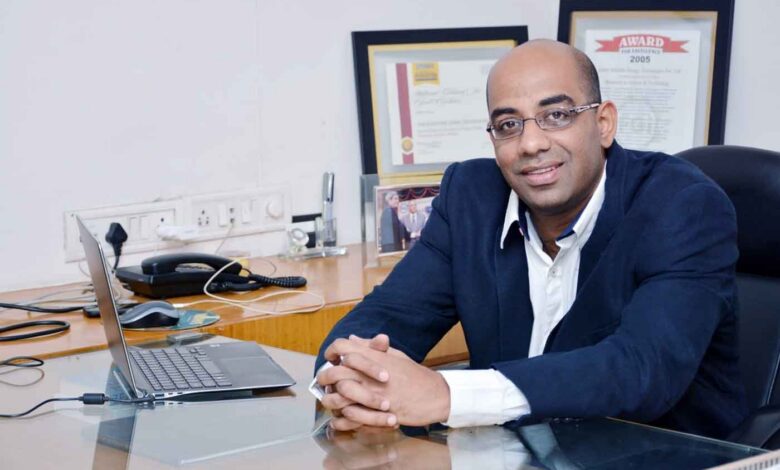
PIONEER EDGE NEWS SERVICE
Wars and geopolitical conflicts in recent years have exposed the vulnerabilities of global energy supply chains, with disruptions increasingly impacting industrial operations and fuel availability. For India, this has reinforced the need to diversify energy sources, reduce dependence on imported fossil fuels and build greater resilience against external energy shocks. At the same time, industries are under growing pressure to reduce emissions and meet increasingly stringent climate goals. Addressing the intersection of these two challenges, Ankur Scientific, a global leader in ethanol/biofuel technologies, gasification, pyrolysis and other bioenergy solutions and a Vadodara-based bioenergy company marking 40 years of R&D in biomass gasification, pyrolysis and biochar technologies, hosted a virtual panel discussion on “Carbon Avoidance & Carbon Capture: The Twin Pathways to Industrial Decarbonisation.”
The discussion examined how industries can reduce emissions at source by replacing fossil fuels with alternative energy pathways, while using carbon capture and removal technologies, including biochar-based carbon removal, for emissions that cannot be avoided. The panel featured managing director Ankur Jain; global head – Thermal and Omni Processor, Jignesh Shah; deputy manager, Srimonta Das and director & head – Digital Marketing Avanee Jain.
Opening the discussion, the speakers highlighted the dual challenge facing Indian industry, particularly hard-to-abate sectors such as cement, steel, chemicals, ceramics, pharmaceuticals, paper and glass, which need to reduce emissions while maintaining energy security. The recent disruptions faced by Morbi’s ceramic sector amid LPG availability constraintspropane and natural gas shortages following the Middle East conflict offered a stark example of how dependence on specific fossil fuels can expose industrial clusters to external energy shocks. Such disruptions reinforce the need for alternative fuel pathways that can strengthen energy resilience while supporting emissions reduction.
“Morbi showed us that a kiln running on imported gas is both a climate risk and a business risk. India’s answer is lying in its fields: crop residue that can fuel industry and lock away carbon at the same time,” said Ankur Jain.
The speakers also noted that carbon now carries a price for Indian industry. India’s Carbon Credit Trading Scheme has set emission-intensity targets for energy-intensive sectors including cement, aluminium, chlor-alkali and pulp and paper, while the European Union’s Carbon Border Adjustment Mechanism has, since January 2026, required importers to pay for the emissions embedded in goods such as steel, aluminium and cement.
A key theme of the discussion was the complementary role of carbon avoidance and carbon capture in industrial decarbonisation. Under carbon avoidance, the speakers outlined the importance of alternative fuels, waste-to-energy solutions and energy efficiency, particularly for high-temperature applications where electrification alone may not be practical. Carbon capture, meanwhile, can address process emissions and residual fossil emissions, particularly in hard-to-abate industrial applications. The discussion emphasised the importance of developing a practical sequence of avoiding emissions wherever possible and then capturing or removing what remains.
“You can’t plug a 1,200-degree kiln into a solar panel. High-temperature industry needs a fuel switch at the source, and gasification delivers that while producing biochar that stores carbon for the long term,” said Jignesh Shah.
The panel also highlighted gasification as an integrated pathway that can deliver two climate benefits from the same system. Through the process, biomass and other feedstocks can be converted into syngas, which can replace fossil fuels in kilns, dryers, furnaces and boilers, while the resulting biochar locks biomass carbon into a stable, long-lasting form. The discussion also highlighted the potential of advanced gasification systems to achieve high conversion efficiency while producing biochar at scale. Ankur Scientific’s solutions, for instance, operate at more than 90 per cent efficiency, deliver over 25 per cent biochar yield and can process more than 60 feedstocks.
The approach also turns agricultural residue, much of which is otherwise burned in open fields, into fuel and biochar, creating an additional income stream for farmers and rural suppliers. Ankur Scientific’s PG series gasifiers are pre-approved by carbon removal standards Isometric and Rainbow, and the company runs a DSIR-recognised in-house R&D laboratory.
The commercial potential of biochar also emerged as an important part of the discussion. The speakers noted that biochar can support carbon removal while generating additional value through applications across agriculture, construction, water filtration, industrial use, soil remediation and animal husbandry. They highlighted that 6–10 gigatonnes of CO₂ removal could be required annually by 2050, while each tonne of biochar can store around 1.25–2.75 tonnes of CO₂. This creates an opportunity to make carbon removal more economically viable through higher-value applications, while generating additional value from co-products such as syngas.
The speakers further emphasised that the effectiveness of decarbonisation technologies ultimately needs to be demonstrated through real-world industrial deployment, with scalability, economics, reliability and measurable impact serving as critical tests. Ankur Scientific’s approach centres on “avoid what you can, capture what you cannot,” combining carbon avoidance and carbon capture across applications. Building on four decades of R&D, the company has reduced 1.5 million tonnes of CO₂ emissions, generated 350,000 MWh of green energy and sequestered 185,000 tonnes of carbon since inception.
Its projects across India and overseas include a 2025 biochar carbon removal project using cotton stalks in Bhuj, an industrial biochar and steam project in Jalgaon producing around 12 TPD of biochar, a cashew-waste-to-energy and biochar project in Côte d’Ivoire, a biomass gasifier and boiler in Madurai that replaced furnace oil, a gasifier installation in Chennai that replaced furnace oil and high-speed diesel, and a 2023 agro-industrial project in Malaysia combining power generation and biochar production.In the year 2025, Ankur Scientific successfully commissioned three projects in India: a cement-sector project expected to avoid around 6,000 tCO₂e annually, an industrial biochar and steam generation project, and a biochar carbon removal project using cotton stalks. Overseas, its work includes a cashew-waste-to-energy and biochar project in West Africa and a combined power and biochar project in Southeast Asia, while earlier installations in India have replaced furnace oil and diesel in automotive and construction-materials plants.
Concluding the discussion, the speakers highlighted that industrial decarbonisation will require multiple technology pathways rather than a single solution, with the overarching objective of achieving measurable and scalable CO₂ reduction without compromising industrial productivity or competitiveness.
“We have spent four decades in R&D so that when this moment comes, the technology would be ready. It is. The task now is to avoid what we can, capture what we cannot, and measure every tonne,” said Ankur Jain.