
12 years of transformative leadership: Strengthening health, education & nutrition


GUEST COLUMN
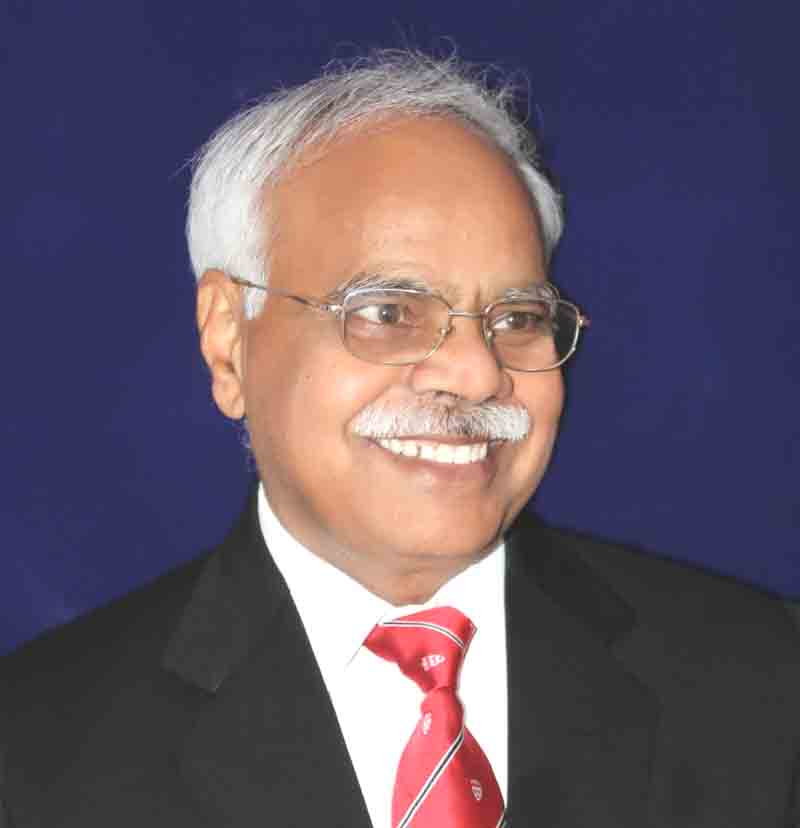 Dr B K S Sanjay
As India completes twelve years under the leadership of Prime Minister Narendra Modi, I felt it would be worthwhile to revisit the themes of health, education, nutrition and infrastructure and review the journey from 2014 to 2026. The purpose of this article is not merely to compare figures and statistics but to understand how policies, infrastructure and governance have influenced the lives of ordinary citizens.
I strongly believe that human resources are the greatest resource on Planet Earth. Health, education and nutrition are the fundamental needs of each and everybody and everybody should be provided these basic necessities. Nations may possess abundant natural resources, advanced technology and financial strength, but ultimately it is the quality of their human resource that determines their progress and prosperity.
I also strongly believe that health is not only an asset but a resource too. A healthy individual contributes productively to society, supports economic growth and participates actively in nation-building. Investment in health, therefore, should be viewed not merely as expenditure but as an investment in the nation’s most valuable resource—its people.
As I look back at the developments of the last twelve years, I find that many of the initiatives undertaken under the leadership of Prime Minister Narendra Modi have focused directly or indirectly on strengthening these three pillars—health, education and nutrition. The expansion of healthcare infrastructure, growth of medical education, strengthening of food security programmes, promotion of digital connectivity and unprecedented investments in road, rail and air infrastructure have together contributed to improving the availability, accessibility and affordability of essential services across the country.
For decades, India looked towards AIIMS Delhi and PGI Chandigarh as the foremost institutions of excellence in tertiary healthcare and medical education. As an alumnus of PGI Chandigarh and presently serving as president of AIIMS Guwahati, I have had the privilege of witnessing this transformation from close quarters. While these institutions continue to remain benchmarks of excellence, the past twelve years have witnessed an unprecedented expansion of similar institutions across the country. Today, more than two dozen AIIMS institutions are functioning or are at advanced stages of development, bringing quality healthcare, advanced diagnostics, medical education and research closer to millions of citizens.
The vision of Universal Health Coverage has gained significant momentum through Ayushman Bharat. For millions of poor and deprived families, access to quality healthcare was once a distant dream. Expensive surgeries and advanced medical treatments often pushed families into financial hardship. Ayushman Bharat has changed this reality by enabling economically weaker sections to receive treatment in some of the finest healthcare institutions in the country, restoring dignity, hope and access to life-saving care.
The digital revolution has further strengthened healthcare delivery. Telemedicine, once considered a feature of advanced healthcare systems, has now become part of everyday practice in India. Improved digital connectivity allows patients in remote regions to consult specialists without long-distance travel, making healthcare more accessible and timely.
The importance of connectivity and timely healthcare was brought home to me through a recent personal experience. A few months ago, during my visit to Nagaland, I had the opportunity to visit a premier national research institution. The director of the institute was my host during that visit, and I had the opportunity to interact with him and understand his work closely. Sometime later, while he was travelling to attend an official meeting, he developed symptoms suggestive of a heart attack. I came to know about his condition through a junior colleague whom I had also met during my visit to Nagaland. Because of improved communication systems, transportation networks and healthcare facilities, prompt arrangements were made for his medical care. He received timely specialist treatment and underwent cardiac intervention. I am delighted to share that he recovered fully and continues to lead a normal, active and productive life. This experience reinforced my belief that availability, accessibility and affordability—supported by strong connectivity—can make the difference between life and death.
Equally remarkable has been the growth in medical education and premier institutions of higher learning. The number of medical colleges and MBBS as well as postgraduate seats has increased substantially. Alongside this, India has witnessed expansion of IITs, IIMs, NITs, IIITs and central universities, strengthening the nation’s human resource base and creating new opportunities for youth across the country.
Nutrition and food security programmes have ensured that vulnerable populations receive essential food grains, reinforcing the principle that no citizen should go hungry. Good nutrition remains the foundation of health, education and productivity.
Infrastructure development has been one of the most visible transformations of the past twelve years. Roads, railways, airports and digital networks have expanded significantly, improving connectivity across the country. In healthcare delivery, availability, accessibility and affordability remain the three pillars of success. A hospital may exist, but unless a patient can reach it in time, its impact is limited. Similarly, educational institutions can transform lives only when students can access them safely and conveniently.
This transformation is particularly visible in the North-East. During the past year, I have travelled extensively across almost the entire region and witnessed how improved connectivity has reshaped opportunities. A powerful example is that of a child born and brought up in a remote village of Arunachal Pradesh near the international border with China. The same boy, whom I later met along with his guardian during his visit to my hospital in Dehradun, shared his journey of education and upbringing. His story reflects how connectivity and access have transformed aspirations into reality, enabling students from remote regions to study in cities like Dehradun, known for its educational excellence.
The developments of the last twelve years demonstrate that health, education, nutrition and infrastructure are deeply interconnected pillars of nation-building. Progress in one strengthens the others, creating a multiplier effect that benefits society as a whole.
I strongly believe that human resources are the greatest resource on Planet Earth. Health, education and nutrition are the fundamental needs of each and everybody and everybody should be provided these basic necessities. Health is not only an asset but a resource too.
By investing in these sectors, India is investing in its most valuable asset—its people. The journey of the past twelve years reflects a nation moving steadily towards inclusive growth, stronger human development and a more empowered future.
(A Padma Shri recipient orthopaedic surgeon, the author is the president of AIIMS Guwahati. Views expressed are personal.)