The White Warriors: Indian Coast Guard Ship Sagar’s heroic mission in post-tsunami Maldives

GUEST COLUMN
 Kripa Nautiyal
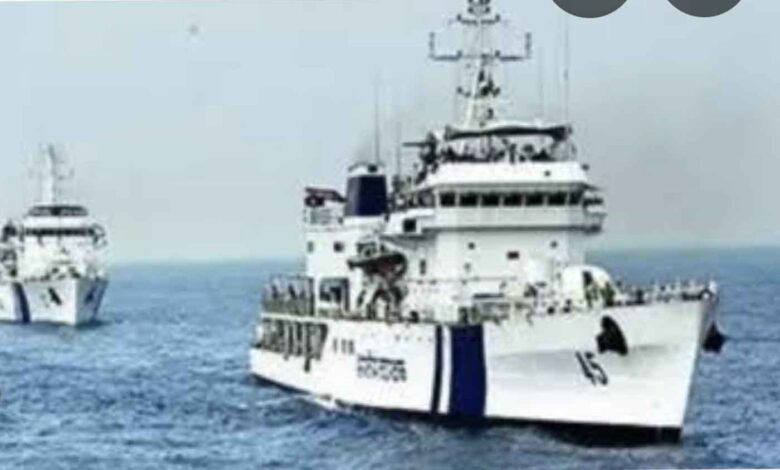
The morning of December 26, 2004, will forever be etched in maritime history as one of nature’s most devastating displays of raw power. The Indian Ocean tsunami that struck Southeast Asia left an indelible mark on millions of lives. As the waves receded, revealing the magnitude of destruction, the Indian Coast Guard Ship (ICGS) Sagar, then commanded by me, found itself at the epicenter of what would become the service’s first-ever international relief operation—Operation Castor.
At 1400 hours on December 26, ICGS Sagar received orders to divert to Kochi and stand by for search and rescue requirements. The gravity of the situation became apparent as the ship navigated through heavy swells entering Kochi harbour—a grim reminder of the fury nature had just unleashed. After embarking Coast Guard helicopter CG-810 and conducting coastal reconnaissance off Alleppey and Quilon, the ship’s destiny took an international turn. On December 31, ICGS Sagar cast off from Kochi with tonnes of relief material bound for the Maldives—the first time a Coast Guard vessel had participated in an international relief operation in the service’s 28-year existence. Despite demands for ships along the Indian coast, India promptly responded to the call for assistance from its friendly neighbour.
By 0415 hours on January 1, 2005, ICGS Sagar had entered the Maldivian Exclusive Economic Zone. Her arrival at Male brought immediate recognition of her capabilities. While other ships involved in relief operations could carry only 5–6 tonnes, Sagar could embark approximately 150 tonnes of relief supplies—a testament to her robust design and the meticulous stability calculations performed by her crew. Joint discussions with the Maldivian Disaster Management Cell confirmed the scale of devastation: the worst-hit atolls included Mulaku, Hadhumaththee, Kalhumadulu, Huvadiva and South Nilandhe. Of 74 deaths reported in the Maldives, 62 were from these southern atolls alone, with power and telecommunications having completely collapsed on several islands.
The first consignment of approximately 40 tonnes was received late on January 1. The ship’s crew, working alongside National Security Service personnel, laboured throughout the night to embark and stow the supplies, with senior diplomats from the Indian High Commission visiting to oversee the process. With a second 40-tonne consignment embarked on January 2, ICGS Sagar sailed for the affected atolls.
The ship’s technical team, led by the Senior Engineering Officer, demonstrated exceptional competence that became a hallmark of the operation. Discussions with islanders revealed widespread depression from over a week without electricity, prompting the ship to prioritise restoring power above all else. At Funidhoo island, the team repaired a 30 KW generator that had been declared beyond repair by other relief teams and local service providers. The generator had suffered contaminated lubricating oil, damaged fuel systems, broken belts and compromised fuel pipes. Through skilled intervention, 250 houses were illuminated, bringing hope to devastated communities. At Barrasilu village, the team repaired a 60 KW generator, restoring power to an entire village, and also successfully restored a 12 KW emergency generator—earning warm appreciation from atoll chief Ahmed Yusuf.
The ship’s medical team provided comprehensive healthcare across the affected islands. At Funidhoo, they conducted health checkups and supplied essential medicines including antibiotics, antispasmodic injectables, and bandages. One of the most critical interventions was the chlorination of water supplies—3,000 litres of rainwater for drinking and 5,000 litres of groundwater for cooking—a preventive measure crucial in averting waterborne disease outbreaks. The team also conducted lectures and demonstrations on epidemic prevention, inoculation, and sanitation. Their responsiveness was further exemplified when an emergency call came from Buruni, 40 miles away; the medical officer and supplies were swiftly airlifted, demonstrating seamless coordination between the ship’s helicopter and medical personnel.
Operations extended to South Nilandhe atoll, where ICGS Sagar’s relief team was among the first to arrive. The atoll capital, Kudahuvadhoo, housed 560 evacuees from the worst-hit islands in temporary relief camps. The technical team repaired a 48 KVA generator at Maaebhoodhoo island- again declared unrepairable by the local agency – restoring power to 150 houses. At Meedhoo island, they inspected three generators rendered non-operational by seawater ingress and devised innovative solutions, including the installation of lamps to improve insulation, to restore these critical power sources. The medical team visited the primary health centre at Kudahuvadhoo, supplied emergency medicines and IV drugs, and examined over 100 patients across multiple islands, overcoming communication barriers through professionalism and ingenuity.
The ship’s helicopter, CG-810, flew 11 hours and 5 minutes across 26 sorties during the operation, with the aircrew ensuring 100 per cent operational availability throughout. Remarkably, the aircraft’s 50-hourly routine maintenance was completed at sea for the first time—a testament to the crew’s adaptability. The helicopter’s versatility extended the ship’s operational radius multifold, facilitating aerial reconnaissance, rapid deployment of relief teams, and emergency medical evacuations. The professionalism of the aviation crew earned praise from the Director General of the Maldivian Coast Guard, who led joint aerial surveys of the affected islands.
Throughout the operation, ICGS Sagar maintained excellent relations with international partners, interacting professionally with a 60-member Bangladeshi relief team and coordinating with the French naval ship Duplex. The presence of the Indian Coast Guard as a “white ship” sent a powerful message to the international community—projecting India’s humanitarian face rather than any intimidating image. The crew also demonstrated cultural sensitivity by helping Indians of Kerala origin who had been unable to contact their families, relaying their details to Indian authorities so worried relatives could receive news.
The operation was not without challenges. Heavy swells prevented local boats from approaching the ship, and the deep-water anchoring at Male—at 40–50 metres depth—required careful execution. The crew rose to every occasion, developing improvised cargo sling nets to transfer supplies when local boats could not come alongside in rough seas.
The exceptional performance of ICGS Sagar during Operation Castor earned unprecedented recognition: two President of India medals, 17 Director General Indian Coast Guard commendations, and eight commendations from the Regional Commander (West). The ship was adjudged the best ship of the Indian Coast Guard for 2005 and received the DGICG trophy. The Maldivian government’s gratitude was expressed through special arrangements for Coast Guard officers to visit Bolifushi Island and experience the “Whale Submarine”.
Operation Castor represented far more than a relief mission. The 19-day operation (December 26, 2004, to January 14, 2005) showcased the Indian Coast Guard’s technical competence, humanitarian spirit, and professional excellence on the international stage. The success of ICGS Sagar established new benchmarks for international cooperation and disaster response, demonstrating that beyond their primary role as maritime security providers, her crew were equally capable of serving as ambassadors of goodwill and instruments of India’s soft power.
As the ship returned to New Mangalore on January 14, 2005, she carried not just the satisfaction of a mission accomplished, but the knowledge that she had helped write a proud new chapter in the Indian Coast Guard’s history—one marked by international recognition, professional excellence, and an unwavering commitment to humanitarian service.
(The author is a retired Additional Director General of the Indian Coast Guard; views are personal)