
GUEST COLUMN
 MM Semwal and Sulakshana Sharma
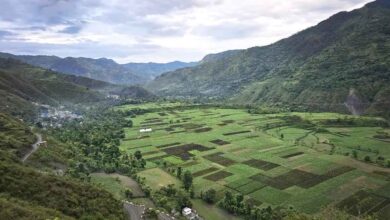
Behind the natural beauty, sacred rivers and rich cultural heritage Uttarakhand is known for, a challenge persists—energy access in rural and remote areas. Rising temperatures, glacier retreat, erratic rainfall, floods and landslides pose major threats to livelihoods and ecosystems. Studies show that many Himalayan glaciers, including those in Uttarakhand, are retreating significantly: for example, the overall glacier area in Uttarakhand declined from about 979 square kilometres in 2000 to 957.6 square kilometres by 2023 with key glaciers like Gangotri shrinking noticeably over this period.
Difficult terrain, scattered settlements, frequent natural hazards, and high costs of extending conventional power infrastructure have long affected the reliability of electricity supply in many villages. Despite progress in rural electrification, many villages in Uttarakhand still face irregular power supply, voltage fluctuations and frequent outages. During monsoons or winters, landslides and heavy snowfall often damage transmission lines, leaving remote areas without electricity for days. For rural households, this affects education, healthcare, communication, and livelihoods.
According to energy access data, while over 96 per cent of villages in Uttarakhand are electrified, many households still face unreliable grid supply. Dependence on kerosene lamps, diesel generators and firewood not only increases household expenses but also poses serious health and environmental risks. In such a geographically sensitive and ecologically fragile region, centralised fossil-fuel-based energy systems are neither efficient nor sustainable. This has created the need for decentralised, clean and locally available energy sources, making solar power particularly relevant for rural Uttarakhand.
In recent years, solar energy has emerged as a transformative force, offering a sustainable and inclusive solution to rural development in Uttarakhand. Transitioning to solar energy may help to reduce greenhouse gas emissions, limit air pollution and ease pressure on forest resources, thereby contributing to both national and global climate action while protecting the State’s natural heritage.
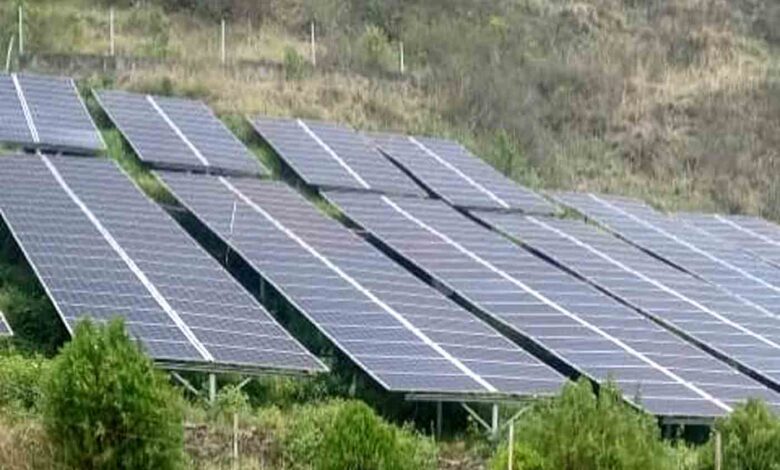
Rooftop solar panels, solar microgrids and off-grid installations are best alternatives to harness solar energy as Uttarakhand receives ample solar radiation throughout most of the year, even at high altitudes, with average daily solar insolation often between about 4 and 7 kWh/m²/day, and many hill areas averaging around 5+ kWh/m²/day, along with 250–287 sunnier days annually, making it highly suitable for solar energy applications even in remote villages.
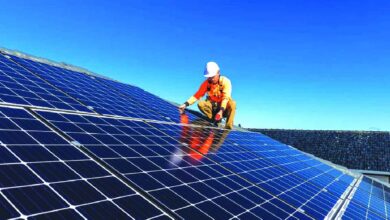
The expansion of solar energy in Uttarakhand has been facilitated by a combination of State-level initiatives and national renewable energy programmes. Subsidies under the policy — such as Rs 23,000 per kW for rooftop solar up to one kW and Rs 17,000 per kW up to three kW — along with incentives from Central programmes like the Pradhan Mantri Surya Ghar Muft Bijli Yojana, have significantly encouraged adoption. As of mid-2025, Uttarakhand had received over 67,000 applications for rooftop solar installations and completed more than 34,000 installations totalling over 127 MW, with subsidies worth over Rs 260 crore disbursed to households and institutions. Subsidies, rooftop solar schemes, solar pump installations and the promotion of solar micro-grids have significantly encouraged adoption, particularly in rural areas.
Unlike hydropower projects, which may disrupt river ecosystems and displace communities, solar installations are relatively low-impact and community-friendly. Solar power allows villages to generate electricity locally, reducing dependence on distant grids and increasing energy security. Once installed, solar systems require minimal operational costs, making them affordable in the long run for rural households and local institutions.
Recognising this potential, the Uttarakhand Solar Energy Policy 2023 sets an ambitious objective to achieve a cumulative solar power generation capacity of 2,500 megawatts by 2027. This target is strategically distributed across sectors: 1,100 megawatts for utility-scale projects, 250 megawatts for the residential sector, 750 megawatts for commercial and industrial use, 350 megawatts for institutional establishments and 50 megawatts for the agricultural sector. Collectively, these allocations reflect the State’s commitment to large-scale integration of solar photovoltaic systems into its energy mix.
This ambitious project is further advanced through Uttarakhand Vision 2030, which prioritises goals such as sustainable growth, rural empowerment and climate-resilient development. Solar energy has significant potential to enhance rural safety, improve living conditions and support long-term regional stability. This is quite evident in sparsely populated valleys where the lack of lighting after sunset limits mobility and economic activity due to the risks posed by wildlife. The installation of solar-powered street lights, as a decentralised and cost-effective solution, can significantly improve night-time safety and reduce such risks. Solar energy has further improved the quality of daily life. Solar home lighting systems now illuminate homes that once depended on dim kerosene lamps. Solar energy minimises dependence on firewood, thereby reducing deforestation and conserving biodiversity. Children can study after sunset, improving educational outcomes. Households can use fans, mobile chargers and small appliances to bring comfort and connectivity. Solar-powered street lights have increased safety in villages by lighting roads, pathways and public spaces.
Solar energy has had a profound social impact, particularly on women in rural areas. Traditional energy sources like firewood and kerosene place a heavy burden on women, affecting their health and consuming valuable time. Access to clean solar lighting reduces indoor air pollution, improving respiratory health and overall well-being. Many women’s self-help groups (SHGs) are now being trained to operate and maintain solar systems.
Within the broader CM Solar Self-Employment framework in Uttarakhand, Solar Sakhis are supported through a combination of financial and institutional incentives that strengthen women’s participation in the renewable energy sector. Solar power projects ranging from 20–200 kW are eligible for capital subsidies of 20–50 per cent, with an additional five per cent subsidy specifically extended to women (Solar Sakhis), persons with disabilities and SC/ST beneficiaries. Further, interest subsidies of around four per cent on bank loans and 25-year power purchase agreements with UPCL ensure long-term revenue security and project viability. This not only provides income-generating opportunities but also enhances women’s confidence, skills and decision-making power within the community. By reducing drudgery and opening new avenues of employment, solar energy contributes directly to gender equality and social empowerment.
Together, these measures reduce financial risk, lower entry barriers, and actively promote women’s roles as solar technicians, operators and small-scale entrepreneurs in rural Uttarakhand. The MNRE’s Suryamitra programme which trained individuals nationwide as solar PV technicians demonstrated a scalable, youth-oriented technical training model that can be replicated in Uttarakhand.
The solar energy sector can play a significant role in powering medical and educational institutions in remote areas, as solar-powered primary health centres can store vaccines, operate basic medical equipment, and provide emergency services even during power cuts. This is particularly important as the State has expanded programmes like the Ayushman health scheme to cover all 614 PHCs and additional CHCs, increasing the utility of reliable power in remote and hilly areas. For education, the Uttarakhand government has signed agreements to equip 30 remote schools with solar power systems, targeting institutions in districts including Chamoli, Uttarkashi, Pithoragarh and Champawat to ensure consistent electricity for lighting, digital learning and other essential functions. Schools and Anganwadi centres equipped with solar panels can function more effectively, supporting education and nutrition programmes. When local communities are involved in planning, installation and maintenance, solar projects become more sustainable and effective. As energy access improves, villages can become self-reliant, economically vibrant and socially empowered. By lighting homes, strengthening livelihoods, empowering women, and protecting the fragile Himalayan environment, solar energy is reshaping rural life in meaningful ways. As the sun rises over the mountains each day, it brings with it the promise of cleaner energy, stronger communities and a sustainable future for rural Uttarakhand.
Despite its promise, solar energy deployment in rural Uttarakhand faces several challenges. High initial installation costs can be a barrier for poor households. Maintenance and repair services are sometimes limited in remote areas. Lack of awareness and technical knowledge can affect system performance and adoption. To overcome these challenges, there is a need for stronger institutional support, better financing mechanisms, skill development programmes and integration of solar energy with rural development schemes. Public-private partnerships and community-based models can further strengthen solar initiatives. Panchayats, cooperatives and SHGs play a crucial role in spreading awareness and building trust in renewable energy solutions.
With sustained policy support, consistent technological advancement and strong community engagement, solar power has the potential to become the backbone of rural energy systems in the State. Integrating solar energy with agriculture, education, healthcare and rural industries can foster a holistic and self-reliant model of development for Uttarakhand.
(Semwal is head of Political Science department, HNB Garhwal University, Sharma is a research scholar; views expressed are personal)