

PIONEER NEWS SERVICE/Dehradun
Union minister for Environment, Forest and Climate Change Bhupender Yadav underlined the importance of making local communities active partners in wildlife conservation, especially in areas severely affected by human-wildlife conflict. He emphasised that effective management of human wildlife conflict is critical to the success of wildlife conservation programmes.
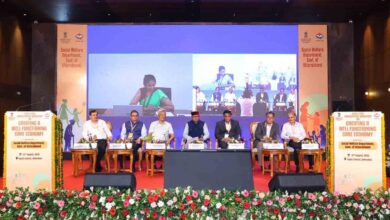
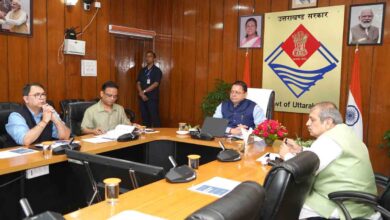
Yadav said this while chairing the 21st steering committee meeting of Project Elephant at the Indira Gandhi National Forest Academy (IGNFA) on Thursday. The meeting brought together senior officials, scientists, and field experts from elephant range States, along with representatives from key conservation institutions, to review the progress of Project Elephant and to deliberate on the way forward for elephant conservation in India. The meeting laid strong emphasis on human-elephant conflict which continues to pose a significant challenge to human safety and elephant conservation. The discussions stressed on community involvement in managing human-elephant conflict.
Yadav also called for improving the working conditions and ensuring the social security of frontline forest staff and ground-level conservation workers. Stressing on the importance of awareness generation, he urged for coordinated efforts with Indian Railways, Ministry of Power, NHAI and mine developers to reduce human-wildlife conflict. He emphasised that institutions like Salim Ali Centre for Ornithology and Natural History (SACON), the Indian Institute of Forest Management (IIFM), Wildlife Institute of India (WII) and State Forest Training institutions should work together to ensure effective implementation of awareness and outreach programmes. The minister also emphasised the need for systematic collection and analysis of data on elephant deaths due to railway accidents and the importance of knowledge sharing among States, institutions, and experts to scale up best practices across regions.
Officials in the meeting gave updates on key initiatives such as the preparation of Regional Action Plans on Human-Elephant Conflict in Southern and North-Eastern India, completion of surveys covering 3,452.4 kilometres of sensitive railway stretches, with 77 high-risk areas identified for mitigation; and the progress of DNA profiling of captive elephants, with 1,911 genetic profiles completed across 22 States. The committee noted that phase-I of the synchronised elephant population estimation in the North-Eastern States had been completed, with over 16,500 dung samples collected. Work is also progressing on the Model Elephant Conservation Plan (ECP) for the Nilgiri Elephant Reserve, which is expected to be finalised by December 2025.Important documents were released during the meeting, including a report on suggested measures to mitigate elephant-train collisions; a comprehensive study on 23 years of human-elephant conflict in Assam, Jharkhand and Chhattisgarh; an advisory on safe tusk trimming practices for captive elephants, and the latest edition of Trumpet, the Project Elephant quarterly newsletter. The committee also discussed preparations for the World Elephant Day celebrations on August 12 in Coimbatore, Tamil Nadu, where the Gaj Gaurav Awards will also be presented.