
From Panchayat to Vidhan Sabha polls, Bhatt’s toughest political mission begins

PURNIMA BISHT | Dehradun
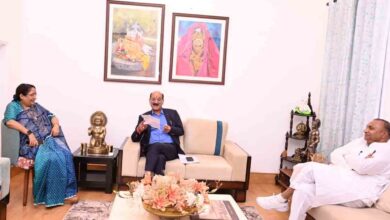
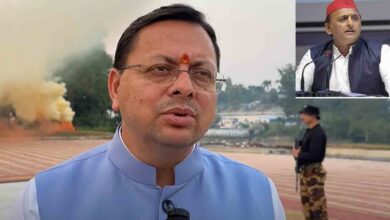
Mahendra Bhatt was officially declared the State president of the Bharatiya Janata Party in Uttarakhand on Tuesday in the presence of chief minister Pushkar Singh Dhami. Bhatt’s reinstatement to the position marks the beginning of what is likely to be his most testing term as the BJP’s State president.
The weight of expectation is considerable, not only to steer the party through the immediate challenge of Panchayat elections but to achieve something no political outfit has managed in Uttarakhand so far- a third consecutive victory in the Vidhan Sabha elections. The Panchayat elections will serve as the first major battleground in Bhatt’s new term and the pressure is already building.
According to party insiders, the CM has assigned senior leaders the responsibility of winning all 12 district Panchayat seats, a symbolic but strategic mission aimed at strengthening the BJP’s grassroots presence in rural and remote areas. While this groundwork may seem localised, its implications are far reaching. The BJP is clearly looking at these elections as an early momentum builder for 2027 and as the State president, Bhatt will be directly responsible for driving this process. Bhatt himself acknowledged the scale of the challenge on Tuesday, stating that every active party worker must actively participate in ensuring the party’s victory in the Panchayat polls. He also added that winning the 2027 Vidhan Sabha elections and securing a historic third term remains the biggest challenge. His words underline the strategic link between the upcoming Panchayat polls and the long game of retaining power in the Vidhan Sabha.
Generally, Uttarakhand has not been kind to ruling parties seeking re-election. Anti-incumbency has been a defining feature of the State’s political landscape, with voters often leaning toward change at the end of each term. That pattern was broken in 2022 when the BJP won a second consecutive term after its 2017 victory, defying conventional trends and establishing a new benchmark in the State’s politics.
However, achieving a third win will not only be unprecedented, it will require navigating complex challenges, internal unity and voter fatigue with the same leadership. This context is likely why the BJP central leadership chose not to take any chances and stuck with Bhatt instead of experimenting with a new face. His reappointment is less about routine organisational decisions and more about projecting consistency and trust at a time when the political ground is anything but stable. With Panchayat polls around the corner and the shadow of 2027 Vidhan Sabha elections looming large, Bhatt’s leadership will be under continuous scrutiny, not only from his party but from a State electorate that has historically preferred change over continuity.
For the BJP, the goal is not just to win elections but to do what has so far seemed impossible in Uttarakhand- break the cycle of anti-incumbency again and establish long term political dominance. For Bhatt, the road from 2025 to 2027 will be about strategy, messaging, performance and above all, ensuring that the BJP’s third term ambition turns from a political slogan into a political reality.