
PIONEER EDGE NEWS SERVICE/Dehradun
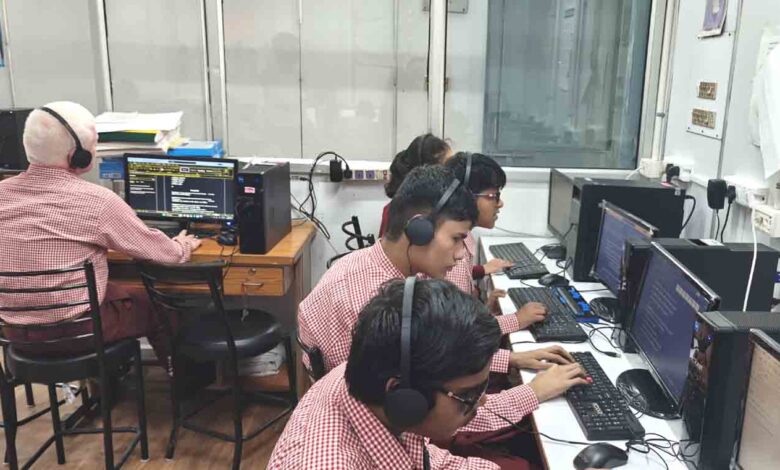
To enhance their skills, the National Institute for the Empowerment of Persons with Visual Disabilities (NIEPVD) has recently commenced computer typing classes in both English and Hindi for visually disabled students on its premises.
Stating this, the NIEPVD principal Amit Sharma said that the institute has recently initiated computer typing classes (Hindi and English) for visually disabled students from classes I to XII. Additionally, smart classes in each classroom have been established to further develop the skills of these students. Two teachers have been appointed for teaching computer typing and other educators within the organisation have also received training to support this initiative. He said that currently, students in classes I to V are exclusively focusing on learning typing skills, while students from classes VII to XII have begun giving home-based examinations, which include half-yearly, quarterly and other assessments, conducted on the computer rather than on paper.
He said that, as a result, 80 per cent of students in grades X and XII have opted to take computer-based exams for the 2026 board examinations under the Central Board of Secondary Education (CBSE). Sharma said that, previously, students were only able to give computer exams on a computer during board examinations. However, with this new learning approach, these students have selected the option to take computer-based exams for all subjects in the upcoming 2026 board examinations.
“To further enhance students’ skills, those in grades IX through XII will be provided with laptops. We have asked for 96 laptops from the department of Empowerment of Persons with Disabilities under the ministry of Social Justice and Empowerment for students in the specified classes to facilitate typing skills more effectively through homework practice and other activities by using these. The authorities approved the proposal and the laptops will be made available soon,” Sharma said.
Additionally, he said that students from classes I to V are currently learning typing skills on computers instead of giving home-based examinations. If this initiative proves successful, they plan to extend this approach next year to include students from class I to V who have not yet participated in computer-based assessments.
Sharma highlighted the goal of improving students’ computer typing skills to enhance their overall capabilities. He said that, in addition to Braille, this training will provide valuable skills applicable across various fields in the future.
He said that many able-bodied individuals who do not comprehend braille are still able to grasp the communication, feelings and other aspects of these students through the written typing.