
Experts call for citizen-driven, climate-resilient urban policy for Uttarakhand’s mountain towns

PIONEER EDGE NEWS SERVICE/Dehradun
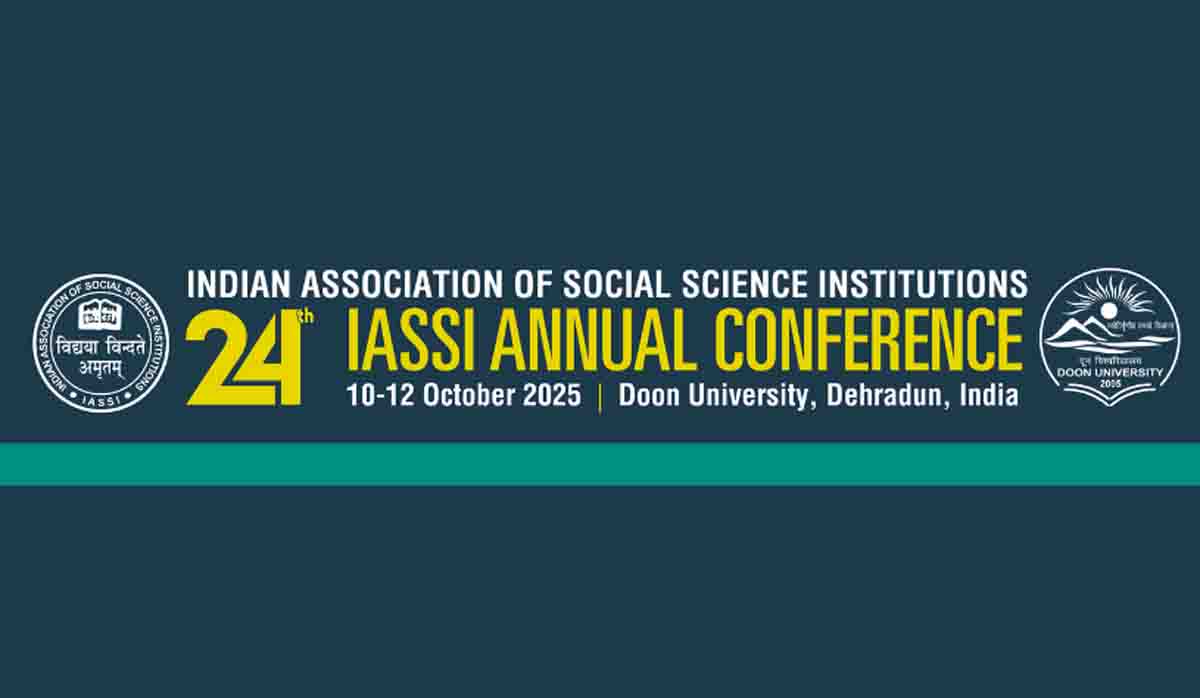
Experts and policymakers at the 24th Annual Conference of the Indian Association of Social Science Institutions (IASSI) stressed the urgent need for a forward-looking, climate-resilient urban policy for Uttarakhand’s mountain towns—one rooted in citizen participation and inclusive planning.
Speaking at the conference in Doon University, Higher Education secretary Ranjit Sinha emphasised that with growing environmental pressures and urban expansion, sustainable development in the Himalayan region must be built on a foundation of local engagement, community-led solutions and strong, climate-informed governance.
Chairing the session on “Green Pathways for Hill Towns”, Sinha said that Uttarakhand’s rapid urban transformation demands policies that balance development with environmental sensitivity and public accountability. “Uttarakhand’s urban centres are changing fast. To ensure this growth is sustainable, we must embed environmental consciousness into our governance structures. Citizen participation, government accountability and evidence-based planning must work together to protect our fragile ecosystems while improving quality of life,” he added.
Opening the session, Doon University vice chancellor Surekha Dangwal contextualised the discussion by pointing to the increasing stress on the region’s natural resources and infrastructure due to unplanned urbanisation. She highlighted the critical need for visionary leadership and community involvement in creating a climate-resilient future for the state. Only through inclusive, ecologically aware policy frameworks, she said, can the unique character and environmental integrity of Uttarakhand’s hill towns be preserved.
Focusing specifically on the Himalayan crisis, geologist SP Sati warned of the region’s growing vulnerability to climate-induced disasters such as landslides, glacial lake outbursts and erratic weather patterns. He called for a development model tailored to the specific ecological risks and geographic realities of the mountain region.
The session brought together a diverse panel of experts to examine the urban challenges confronting Uttarakhand. Founder of SDC Foundation Anoop Nautiyal highlighted community-based approaches to solid waste management as essential for maintaining the ecological health of hill towns. Surgeon and author Dr Mahesh Bhatt spoke on the intersection of environmental degradation and public health, stressing the urgent need for clean, safe urban environments. Ashwani Luthra from Guru Nanak Dev University advocated for sustainable and terrain-sensitive urban design, while Jyoti Chandiramani of Symbiosis School of Economics offered insights into aligning economic planning with environmental priorities.
The day also featured a series of technical sessions that delved deeper into the broader climate and livelihood challenges in the region. These sessions showcased interdisciplinary research on a wide range of issues, including India’s evolving environmental policies, campus sustainability initiatives, gendered vulnerabilities in the face of climate change, and comparative environmental challenges in neighbouring countries like Nepal and Bangladesh. Other presentations explored the impact of climate risks in coastal Kerala, the structural barriers to climate action, and emissions trends across BIMSTEC nations. The discussions highlighted the urgent need for integrated, inclusive, and policy-led environmental governance in Uttarakhand, calling for development that centres on sustainability, equity, and resilience, with a focus on environmental justice, gender-sensitive planning, and cross-regional collaboration.
The ongoing three-day national conference has drawn more than 400 delegates from across India.