
MANSI BHAMBRI/Dehradun
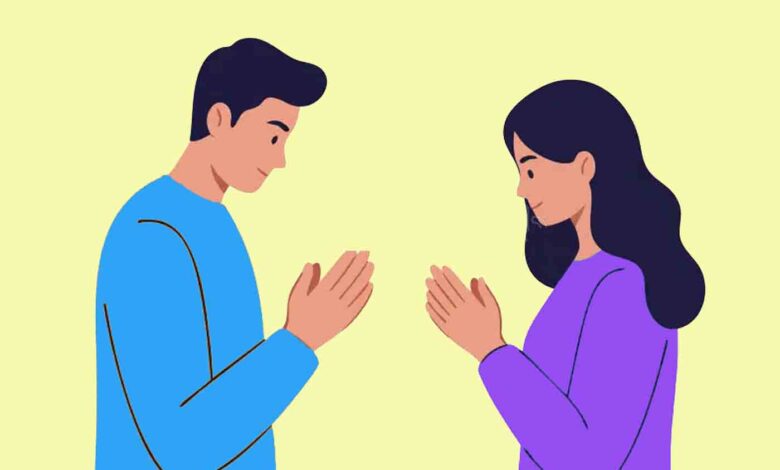
Many members of the public now use western- style English greetings like “good morning” or “hi” instead of traditional Indian greetings like Namaste or Pranam. Some Doonites attributed this change to the influence of social media, expressing concern over the erosion of cultural roots. However, experts suggested that while the mode of greeting may have changed, the underlying sentiment of respect and courtesy remains the same in both traditional and western greetings.
Local resident Saksham Bisht stated that it is true that traditional greetings have evolved into more modern forms over time. This change is evident across all age groups, particularly among younger individuals. He pointed out that social media’s influence has played a significant role in this transformation of greetings. He opined that individuals should tailor their greetings to suit the context; for example, using a Namaste is more appropriate with relatives, while western greetings are more suitable in schools and professional settings. Despite these changes, he underscored the importance of maintaining traditional greetings, as they help younger generations connect with their cultural heritage.
Senior citizen Jagmohan Singh shared, ‘My grandchild frequently greets me with phrases like ‘good morning’ and other western expressions. This shift has been distancing younger children from our traditional culture, which should be preserved. I believe that schools should promote the values of traditional culture, such as greeting property with a Namaste, among children.’
Experts too have opinions on this transition from traditional greetings to western expressions. The former director of the Culture department Beena Bhatt said that the influence of social media has contributed to this change in greeting styles. She observed that people are increasingly adopting English phrases like ‘good morning’, which has become a common habit. Bhatt emphasised that while the younger generation is embracing these new norms, traditional greetings have not entirely disappeared, as individuals often choose greetings (traditional or western) based on their surroundings.
She stressed that whether one uses the traditional greeting Namaste or the modern greeting like ‘good morning’ and others, the words may differ, but the underlying meaning and sentiments remain unchanged.
‘Jankavi’ Atul Sharma said that in certain respects, traditional greetings have evolved towards more western expressions. While the wording has transformed, the sentiment and meaning stay consistent. He pointed out that even though people employ different phrases, it is vital to ensure that both traditional and western greetings convey the same sentiment of respect. He further highlighted that if individuals consciously use traditional greetings like Namaste or Pranam, they will foster a stronger connection to their cultural heritage.