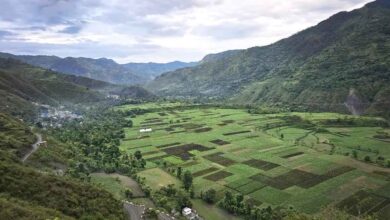
Empty mountains, vulnerable borders: How Uttarakhand’s out-migration has become a national security challenge

GUEST COLUMN
 Kripa Nautiyal
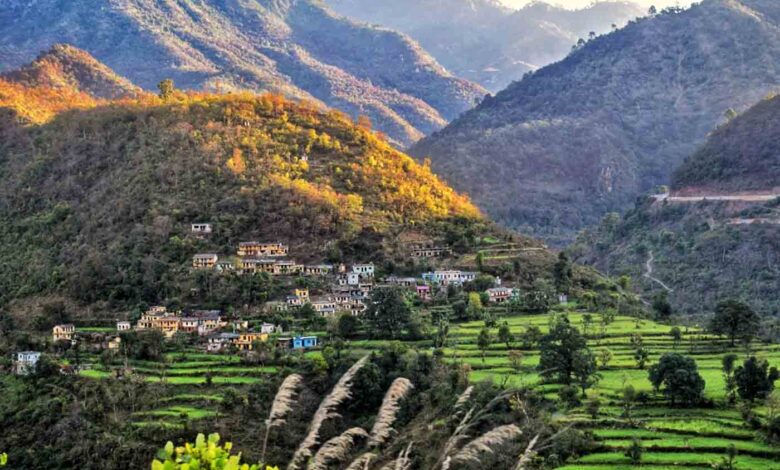
The Himalayan State of Uttarakhand—often called Devbhoomi—is witnessing a silent crisis with far-reaching implications beyond demographics and economics. Villages are emptying, farmlands lie abandoned, local governance structures are declining and social institutions that once defined mountain resilience are eroding. What appears as an internal migration trend has evolved into a national security concern, particularly for a frontline border State sharing 625 kilometres of borders with China and Nepal.
Over the past two decades, Uttarakhand has lost lakhs of people from its remote districts. Over 1,800 settlements have become “ghost villages” according to State records. While the administration has portrayed this as a developmental issue, the deeper concern is how depopulation weakens border management, surveillance, local intelligence and national defence preparedness. This article examines the national security impact of out-migration and proposes actionable interventions.
A shrinking population weakens India’s natural defences
Border regions in Uttarakhand historically relied on robust local communities—shepherds, farmers, ex-servicemen and voluntary village patrols—who acted as the first line of intelligence regarding suspicious movement along the border. However, depopulation has drastically reduced these human assets.
Erosion of village-based intelligence networks
Local inhabitants were once key informants for police, SSB and intelligence agencies. With fewer families staying back, patrolling becomes more complicated, suspicious movement goes unnoticed and law enforcement loses culturally embedded sources of information. In areas such as Johar Valley, Niti–Mana, Darma–Byans and Tons–Yamunotri, the absence of settled populations has expanded unobserved stretches along the border.
Increased risks of cross-border smuggling and infiltration
Uninhabited stretches along the India–Nepal border in Champawat, Udham Singh Nagar and Pithoragarh make it easier for smugglers, human traffickers and illegal traders to exploit porous boundaries. Nepal’s open-border system already requires tight vigilance; depopulation on the Indian side weakens that vigilance.
Strategic vulnerability in a China-facing State
The 2020 Galwan incident underscored China’s strategy of asserting presence in sparsely populated border zones. Depopulated villages on the Indian side create psychological perception of “vacated territory,” reduced civilian infrastructure and logistical challenges for Army and ITBP movements. China, on the other hand, systematically builds dual-use villages near the border in Tibet. The contrast is stark and worrisome.
Decline in agricultural land use and food security
Abandoned terraced fields destabilise slopes, cause forest encroachment and reduce local food production. During emergencies—natural disasters or military crisis—such regions cannot sustain themselves.
Loss of skilled human capital important for defence
Uttarakhand has historically supplied a disproportionately high number of soldiers to the Army and paramilitary forces. But out-migration of youth to metros reduces this pipeline. The shrinking of the “hill soldier” tradition affects long-term recruitment patterns for units like Garhwal Rifles and Kumaon Regiment, losing a bank of topographically ready youth for deployment in high altitude mountainous terrain.
Impact on internal security
Migration often brings young men into unregulated urban shelters, exploitative labour networks and sometimes gangs. With poor support systems, they become vulnerable to criminal networks, drug trafficking syndicates and radical misinformation streams on social media. As the mountains empty, the population concentrates in Dehradun, Haridwar, Haldwani, Kotdwar and Rishikesh. This stresses civic systems, increases crime potential and creates social friction between migrants and locals.
Governance and administrative weakening
Without inhabitants, Gram Sabhas become defunct, reducing the ability to implement border area development schemes effectively. Thousands of schools run with 5–10 children; many PHCs remain formally open but physically empty. This accelerates migration and creates governance vacuums.
How to reverse the trend: Policy suggestions
Solving out-migration is not only a developmental duty—it is a strategic necessity. A multi-layered approach is needed combining livelihood revival, border-area development and security-focused settlement planning.
· Create “Strategic Border Villages” with incentives
The Government’s Vibrant Villages Programme (VVP) is a good start, but Uttarakhand needs a customised model that includes 10–15 year income tax holidays for residents, priority postings for government employees in home districts, special housing grants for families willing to resettle and guaranteed road, internet and healthcare infrastructure. Strategic settlements must be treated like defence assets—just as China does.
· Set up integrated border development clusters
Develop micro-clusters in remote valleys with food processing units, high-altitude tourism hubs, wool and handloom cooperatives, military-civilian markets and hostel-schools for children of remote families. Clusters reduce isolation and create economies of scale.
· Mobilise ex-servicemen as village defence volunteers
Uttarakhand has lakhs of retired soldiers who can be formally engaged for village patrols, support to police and SSB, community disaster response and mentoring youth for defence careers. This will restore the security grid of the mountains.
· Promote high-altitude rural tourism with regulation
Local homestays, trekking circuits, winter villages and heritage trails can provide sustainable income. However, they must be regulated to prevent ecological pressure. Tourism can help revive markets in Munsiyari, Harshil, Kanatal, Mundali, Chakrata and Khirsu.
· Expand digital services and remote work opportunities
The pandemic proved that remote work is viable. Providing high-speed broadband to border villages will allow youth to work from home while supporting family structures.
· Strengthen border area roads and strategic tunnels
Improved connectivity helps both military and civilians. Key projects needed include Milam–Munsiyari road, Harshil–Mana connectivity, Tanakpur–Pithoragarh all-weather road and revival of traditional trade routes with Nepal and Tibet.
· Restore traditional agriculture and introduce high-value crops
Promote rajma, apples and walnuts, herbs like kutki and jambu, organic millets and floriculture. With cooperative marketing and MSP-like assurance, farming can again become profitable.
· Introduce special educational zones in remote areas
Model residential schools for mountain children with hostels and digital classrooms will encourage families not to leave.
· Dedicated migration monitoring policy
The State must establish a Migration Data Centre to track reasons for leaving, demographic profiles, vulnerable villages, and security impact. This will inform targeted interventions.
Out-migration from Uttarakhand is no longer merely a socioeconomic trend—it is a strategic alarm bell for India’s national security. Depopulated villages mean weaker borders, loss of local intelligence, increased criminal activity and reduced resilience against external threats. Reversing this trend requires a whole-of-government approach, treating Uttarakhand’s border communities not just as citizens but as sentinels of the nation. Reviving the mountains is not only about development; it is about strengthening India’s Himalayan shield.
(The author is a retired additional director general of Indian Coast Guard; views expressed are personal)