India’s Soul is Oneness, Gen Z unaware of India’s Uniqueness: Dr Chinmay Pandya

PIONEER INTERVIEW
RADHIKA NAGRATH/ Haridwar
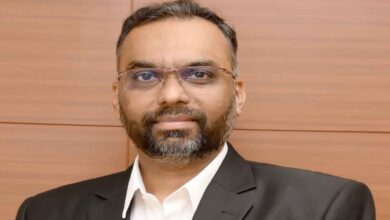
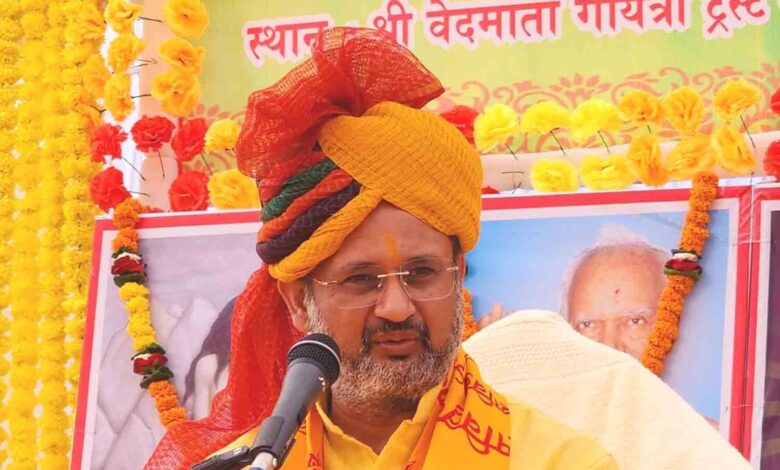
As the All World Gayatri Pariwar celebrates its centenary year this month, The Pioneer engages with Dr Chinmay Pandya, who returned to India responding to his inner call quitting the service as a consultant in West London Hospital Trust, London and joined Dev Sanskriti University’s leadership team as a pro vice-chancellor. The grandson of Pandit Sriram Sharma Acharya- the Guru who founded the Gayatri Pariwar- Dr Pandya considers himself only as a representative disciple of the thought revolution movement initiated by Pt Sriram Acharya.
Some excerpts from his interview on how the new generation should take on the existing challenges of technological revolution and pave the road to Bharat becoming a Vishwaguru.
Q. Do you think that Bharat is becoming a Vishwaguru again?
India’s knowledge and science are amazing and its wisdom is even more amazing. But the younger generation is unaware of its heritage and so the confident statement of Bharat set to become a Vishwaguru once again sounds farfetched. The foremost reason, I think, is that we are unfamiliar with our own knowledge. When I was a little child of eight years, a meeting with my Guru changed my life. I approached my Guru with a doubt while reading a scripture. My guru, who wrote 3400 books, said, “Son, don’t reject something without reading it.” And I think that is very valuable for the present time: first understand, then believe. Many people say it is written in the scriptures, but have they actually read it? Have you read what’s written in the Bhagavad Gita? Have you read what is written in the Upanishads? When one reads, one gets closer to God and one’s self-respect is enhanced. And lastly, you are able to determine the truth of your own nature. It is not something given by someone else. If I feel thirsty, I will drink water myself. I won’t tell someone else to drink water for me. Likewise, when I have a hunger for knowledge, I should search for it myself. So- I would say that if India is to regain its past glory, every Indian should study the wisdom and knowledge that India has been a proud repository of for millennia. But this study should not be like scratching the surface but delving deep into what the ancient seers have realised and then bequeathed to humanity at large at the dawn of human civilisation.
Q. Today’s generation seems fascinated more by social media rather than books. Don’t you think so?
With the advent of social media, the chaos has deepened even more. The generation born after 1995, which we call Generation Z or Zoomers, was the first generation in the world to get smartphones as they entered their teenage period. The iPhone came out in 2007 while likes and tweets arrived by 2009, front-facing cameras were available by 2010 and in 2012, Facebook bought Instagram. So not only was I forced to post about my life but I was also forced to be judged by others. Our social acceptability is no longer determined by toys and games, but by YouTube videos and Instagram reels. If I get likes I am right; otherwise, my opinion is wrong.
Q. Life seems to be moving from real to artificial life. What’s your idea?
Life has indeed moved from real to artificial. Now, when we form an opinion about someone, we do it based on their online life where people present themselves in a certain way. And we form our opinions based on what they show us. So, integrating artificial intelligence with spirituality is essential; otherwise, it will be disastrous. It is like working hard on the horses, but not on the horse riders. Our concern is that a lot of effort is being put into technology, but the same amount of effort needs to be put into those who will operate it. If they don’t operate it properly, the horses will go anywhere and won’t take you to your destination. So, it needs to be controlled, disciplined and most importantly, it must be useful for humanity.
Q. You represented India at the United Nations, didn’t you?
Well, there are different platforms and different subjects, but I always tell people this: if you want to think about India, think of it as a country with 22 official languages. The whole of Europe has 24 and Europe is divided because of the languages and there are so many countries exclusively founded on these languages. But India is one country. There are 19,500 dialects, which is more than all of Latin America and Africa combined. Every five km or so, the culture changes in India. Despite all these benumbing diversities, India is one and indivisible. Not only is it one but India has given a philosophy that no one under the sun has ever dared to express before. The concept of ‘Vasudhaiv kutumbakum’- one World One family- is one of them. Absorbed in the realization of the essential and spiritual Oneness of All, ancient India strove to harmonise all the differences existing in the practical life into the Oneness that they felt to be overwhelmingly real. That tradition-Many in the One and the One in the Many- has been continuing…
Q. You spent almost a decade in Europe. What did you feel on returning to India?
I was a consultant at Cambridge, but as a representative of Shanti Kunj, I gave three speeches at Trinity College. Yes, I have been there for nine and half years. An inner call brought me back to Bharat, the sacred land. And I feel fulfilled.