
PIONEER EDGE NEWS SERVICE/Dehradun
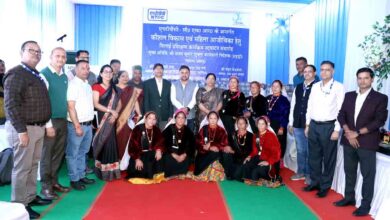
The use of traditional knowledge is also important along with modern science to enhance disaster management. Experts said this at the start of a two-day national training programme on monsoon preparations organised jointly by the Uttarakhand State Disaster Management Authority (USDMA) and National Institute of Disaster Management (NIDM) here on Thursday.
The State Disaster Management Advisory Committee vice chairman lieutenant colonel (retd) Raghuveer Singh Bhandari said that along with the government machinery, it is important for every citizen to be capable of facing disasters. He stressed on the need for training and making the citizens capable of acting as first responders in disaster scenarios.
Along with the latest technologies and scientific systems, it is also important to conserve and utilise the traditional knowledge of the local communities. Based on their experience, the residents of mountainous regions have developed a special skill to understand the weather, geology, water sources and signals from nature. Such traditional knowledge often helps in evaluating potential disaster threats, he said. Bhandari further stressed on the need for making disaster risk mitigation activities stronger at the village level. Stating that there is a considerable number of ex-servicemen in the State, he said that their experience, discipline, leadership skill and capability to make better use of resources can prove to be very useful in disaster management.
Disaster Management and Rehabilitation secretary Vinod Kumar Suman said that this training programme is aimed at further strengthening coordination among various departments and informing officials about latest developments, innovations and best practices in the sphere of disaster management. Since disaster management involves multiple departments, clear communication, coordinated working style and clear understanding of the responsibilities is essential, he said. Pointing at the proclivity for making reels in rivers, waterfalls, deep ravines and other risky spots, he said that all such sites should be identified and declared no-selfie zones.