
PIONEER EDGE NEWS SERVICE / Dehradun
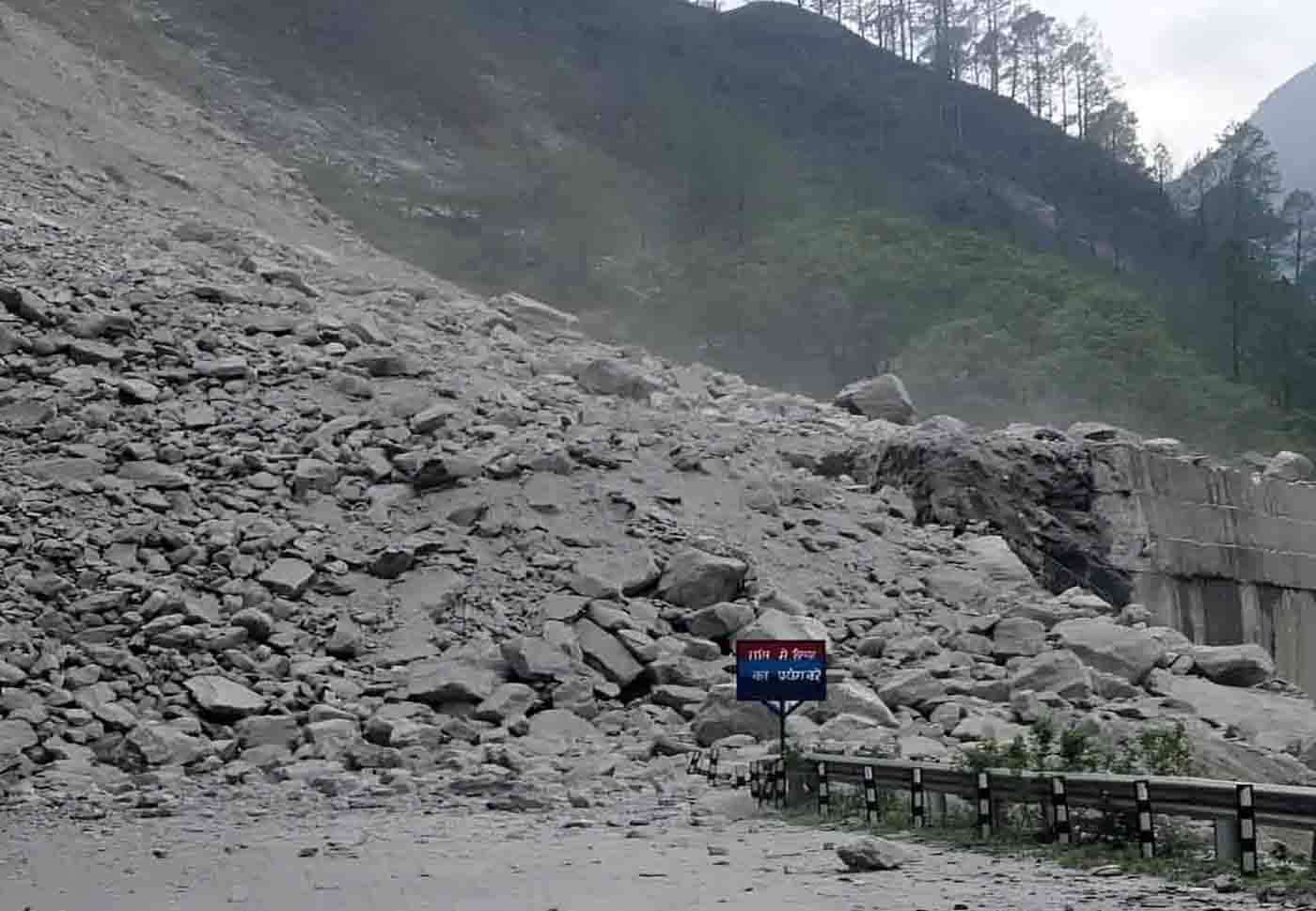
As the Char Dham Yatra gathers pace, areas vulnerable to landslides continue to pose a major challenge on major pilgrimage routes in Uttarakhand, with engineers pointing to a mix of fragile Himalayan geology, heavy rainfall, hill cutting and inadequate slope protection as the primary reasons behind recurring road disruptions.
Public Works Department (PWD) officials stated that landslides are a recurring reality in Uttarakhand due to the State’s disaster-prone terrain, especially during the monsoon season. The officials stressed that while intense rainfall remains one of the biggest triggers, landslides are usually caused by multiple factors acting together rather than a single reason.
They said that the risk becomes significantly higher in areas where road widening and mountain cutting are carried out without proper slope stabilisation measures. When freshly cut mountain slopes are left exposed, rainwater seeps in, weakening the soil and rock structure and eventually making the slopes unstable.
With lakhs of pilgrims expected to travel on the Char Dham routes in the coming months, the officials said that extensive slope protection and treatment work is underway along vulnerable highway stretches to minimise disruptions and improve road safety.
Various techniques including benching, slope nailing, netting and shotcrete work are being used in vulnerable sites. Geo-textile protection and fabric lining are also being used at various locations, depending on the condition of the slope.
Officials further said that slope nailing is used to strengthen unstable mountain sections, while netting helps prevent loose rocks and debris from falling onto roads. Shotcrete is applied on exposed surfaces to provide additional support and reduce erosion caused by rainfall.
Slopes disturbed during cutting and road expansion generally take one to three years to stabilise naturally. Protection and stabilisation work must continue simultaneously with road construction projects, particularly on Char Dham routes, to reduce the chances of landslides during the monsoon season, they added.
According to official data, the Rishikesh-Gangotri national highway 34 has 85 identified landslide zones, of which 46 have been sanctioned for treatment. Out of these, work has been completed on 19 with work underway on 27 and 39 in the DPR stage. Rishikesh-Badrinath NH 7 has 160 landslide zones, with work sanctioned on 101 zones. Dharasu-Yamunotri NH 134 has 45 landslide-prone zones, of which work has been sanctioned on 32. Similarly, Rudraprayag-Gaurikund NH 107 has 46 landslide zones with 25 sanctioned for treatment, while Kund-Chamoli NH 107A has 13 identified landslide zones, of which three have been sanctioned for treatment.