
CHANCHAL GOLA/Ramnagar
Even as Corbett Tiger Reserve (CTR) completed 90 years this weekend presenting one of India’s most successful conservation stories, experts point out that it also faces the challenge of balancing tourism and conservation.
When Project Tiger was launched in 1973, Corbett was among the first nine tiger reserves selected under the programme. Since then, it has emerged as one of the most important landscapes for tiger conservation in the country.
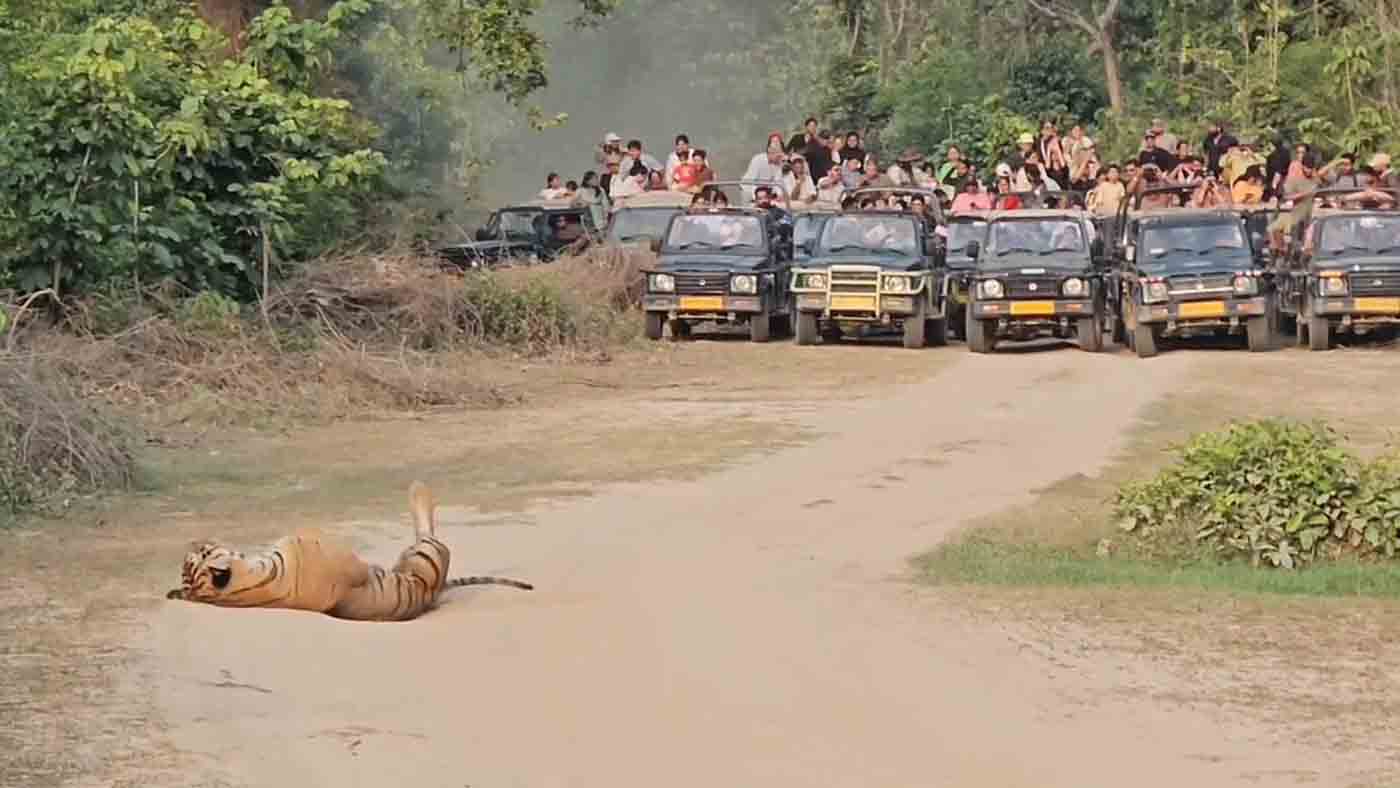
Established in an area of around 324 square kilometres in 1936, CTR expanded over the years and now covers 1,288.31 square kilometres. In addition to tigers, it is home to elephants, leopards, gharials, otters, crocodiles, hundreds of bird species and a rich variety of flora. Noted wildlife photographer Deep Rajwar praised CTR’s achievements but expressed concern over the increasing pressure of tourism. “If Jim Corbett were alive today, he might not even recognise the landscape he once knew,” Rajwar said. According to him, tourism has provided employment and economic opportunities to people in Ramnagar and surrounding areas, but the character of tourism has gradually changed. He said that a growing number of visitors now come to the forest without much interest in wildlife or nature, while serious wildlife enthusiasts are increasingly being replaced by tourists looking primarily for entertainment.
“There is a need for a tourism policy that promotes responsible and nature-sensitive tourism while ensuring that the peace and original character of the forest are protected,” he said.
Wildlife expert Sanjay Chhimwal described Corbett as an important chapter not only in India’s but also in Asia’s conservation history. He said the primary objective behind establishing the national park was to protect forests, wildlife and biodiversity, and CTR continues to fulfill that objective even after 90 years. The healthy populations of tigers, elephants, birds and other wildlife are evidence of sustained conservation efforts, he said.
Chhimwal also highlighted the contribution of Jim Corbett, who played an important role in promoting protection of wildlife and forests in the region. Wildlife expert Sumanta Ghosh said that the reserve is home to one of the world’s highest concentrations of tigers, while thousands of people depend directly or indirectly on the forest and tourism for their livelihoods. However, he stressed the need for a clear and balanced tourism policy for the future. “Tourism should be developed in a way that visitors do not simply come, enjoy themselves and leave. They should return as ambassadors of Corbett’s biodiversity, culture and natural heritage,” Ghosh said. He cautioned that tourism centred only on entertainment, noise and commercial activities would not be in the interest of the forest.
Wildlife enthusiast Himanshu Tirwa said the healthy wildlife population reflects the success of conservation efforts. However, increasing pressure on forests and shrinking wildlife habitats are contributing to growing human-wildlife conflict. Areas like Dhela, Sitabani and the Terai landscape are among those witnessing increasing pressure, he said.
CTR director Saket Badola said that the country’s first national park continues to remain at the forefront of conservation. According to Badola, Corbett currently has around 260 tigers and is among the landscapes with the highest tiger density in the world. Over the past 90 years, Corbett has witnessed major geographical and ecological changes. Its boundaries expanded, the construction of the Kalagarh dam on the Ramganga river resulted in the creation of a large reservoir and tourism gradually emerged as a major economic activity in the region. Despite these changes, Corbett has retained its identity as one of the world’s most important conservation landscapes.