Road traffic accidents: A leading cause of death, disability and deformity in India

GUEST COLUMN
For decades, we have witnessed the silent but overwhelming crisis that road traffic accidents have created across India. Each passing year reinforces the urgency for addressing this catastrophe. The impact of these accidents is not limited to the moment of collision as it stretches into months, years and often an entire lifetime of suffering.
As orthopaedic surgeons, we see these consequences daily—broken bodies, shattered families and countless dreams abruptly cut short. The sight of a young adult, full of promise, lying helpless after a preventable accident is a memory that stays with us forever. What troubles us most is that so much of this devastation is entirely preventable.
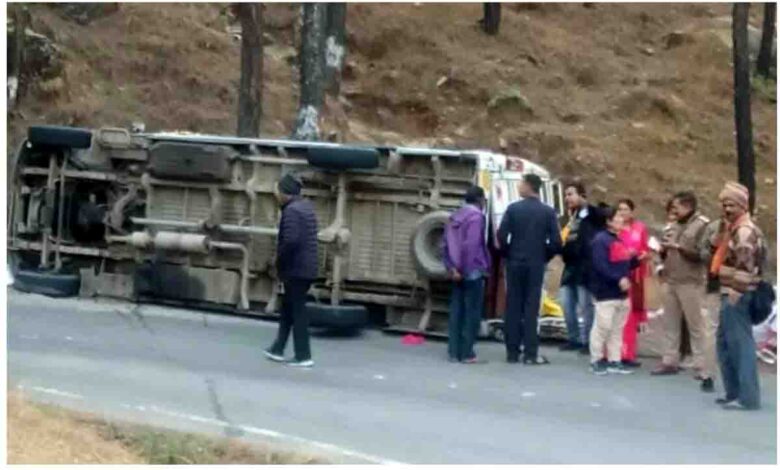
Across India, road accidents are among the leading causes of orthopaedic deaths, deformities and lifelong disabilities. Young adults—who should be entering their most productive years—are disproportionately affected. Their lives, filled with potential, often come to a halt due to a moment’s negligence: an over speeding vehicle, a missed helmet, a distracted driver, or a faulty road.
In 2024, India recorded approximately 4.73 lakh road accidents, resulting in around 1.70 lakh deaths. Although India has only about one per cent of the world’s vehicles, it accounts for nearly 11 per cent of global road accidents. While the number of accidents has decreased compared to past years, the fatality rate has risen—likely due to the expansion of high-speed highways and increasingly reckless driving behaviour.
The suffering of survivors is layered and complex. A person with a disability loses not only mobility or function but also opportunities, social inclusion and economic independence. Many struggle to access education, healthcare, or employment. Society, unintentionally or consciously, often discriminates against them. Beyond physical injuries, survivors endure daily psychological trauma—a silent burden that follows them through every routine task.
Families carry emotional and financial burdens that can last a lifetime. Parents may spend years caring for a disabled child, siblings may forgo career opportunities to provide support, and spouses may shoulder the emotional strain of altered futures. The ripple effect extends beyond households, affecting communities and local economies.
Globally, nearly 1.71 billion people are affected by musculoskeletal conditions. India, with its growing population and vehicular traffic, carries a significant share of this burden. Orthopaedic deformities and disabilities, whether congenital or acquired, remain a major public health concern.
Congenital conditions such as clubfoot, cerebral palsy, congenital hip dislocation, myelomeningocele etc limit mobility and function from birth. Acquired conditions such as injuries from road accidents further add to the burden. Joints—the structures responsible for mobility—lose function in such cases, leading to significant limitations in daily activities and independence.
It is in these moments—standing beside a patient’s bed delivering life-altering news—that we are reminded of the vital role orthopaedic surgeons play outside hospital walls. We are not merely treating fractures or dislocations; we are confronting a national challenge that demands more than clinical intervention.
Prevention begins with awareness and responsible behaviour. Wearing helmets on two-wheelers and seat belts in four-wheelers is not a formality—it can mean the difference between life and death. Observing speed limits, especially in crowded areas, can prevent collisions. Drivers must avoid mobile phones and sobriety behind the wheel must be a personal and social commitment.
Communities also play a role. Well-maintained roads, clear signage, pedestrian crossings, speed breakers, and proper street lighting reduce accident risks. First-aid preparedness and knowing how to respond quickly to a crash can limit long-term disability. When parents ensure their children wear helmets, when drivers slow down near schools, or when neighbourhoods organize safety awareness sessions, the collective impact is profound.
India urgently needs a structured, nationwide movement involving healthcare professionals, policymakers and community leaders. Many of us have the resources and platforms to contribute meaningfully. By fostering caution, promoting road discipline, and creating supportive environments, we can reduce both the frequency and severity of accidents. The authors have conducted more than two hundred free health camps, delivered numerous public lectures, published multiple awareness articles and guest columns and given regular TV and radio programmes to advance road safety.
Society must recognise that persons with disabilities are defined not by limitations but by their potential when given equal opportunities. As done every year, India observed the International Day of Persons with Disabilities on December 3, reaffirming its commitment to inclusivity. The day reminded us that the dignity, rights and well-being of persons with disabilities must remain central to public policy. This year’s theme, focused on a disability-inclusive society, reinforcing that social progress is incomplete without full and equal participation of all individuals.
At the heart of all these efforts lies a simple truth: prevention is better than cure. Early detection, timely treatment, and proper rehabilitation reduce the severity of disability. But beyond medical care, conscious choices, responsible driving, and community engagement can prevent countless injuries before they occur. Roads do not merely connect places; they connect lives and futures.
India stands at a crossroads. We can continue witnessing the mounting toll of preventable accidents, or we can act decisively. Responsibility does not lie with the government alone; it belongs to every citizen, driver, family and professional who values life. For medical professionals, especially orthopaedic surgeons, this responsibility is profound—we see the consequences firsthand and know the cost of inaction.
The time has come to join hands and build a safer, healthier, and more inclusive India—an India where fewer lives are cut short, where fewer people live with preventable disabilities and where every individual can thrive. Through awareness, education, advocacy and compassionate care, we can change the troubling reality of road accidents and build a nation that places the highest value on human life.
Let us remember the guiding motto: “If there is life, there is everything,” and “Mobility is an asset, disability is a burden.” We must strive to prevent death, disability and deformity caused by road accidents through our collective efforts.
(BKS Sanjay is an orthopaedic surgeon and president of AIIMS, Guwahati, Gaurav Sanjay is an orthopaedic surgeon; views expressed are personal)