

AFZAL HUSSAIN FAUJI / Nainital
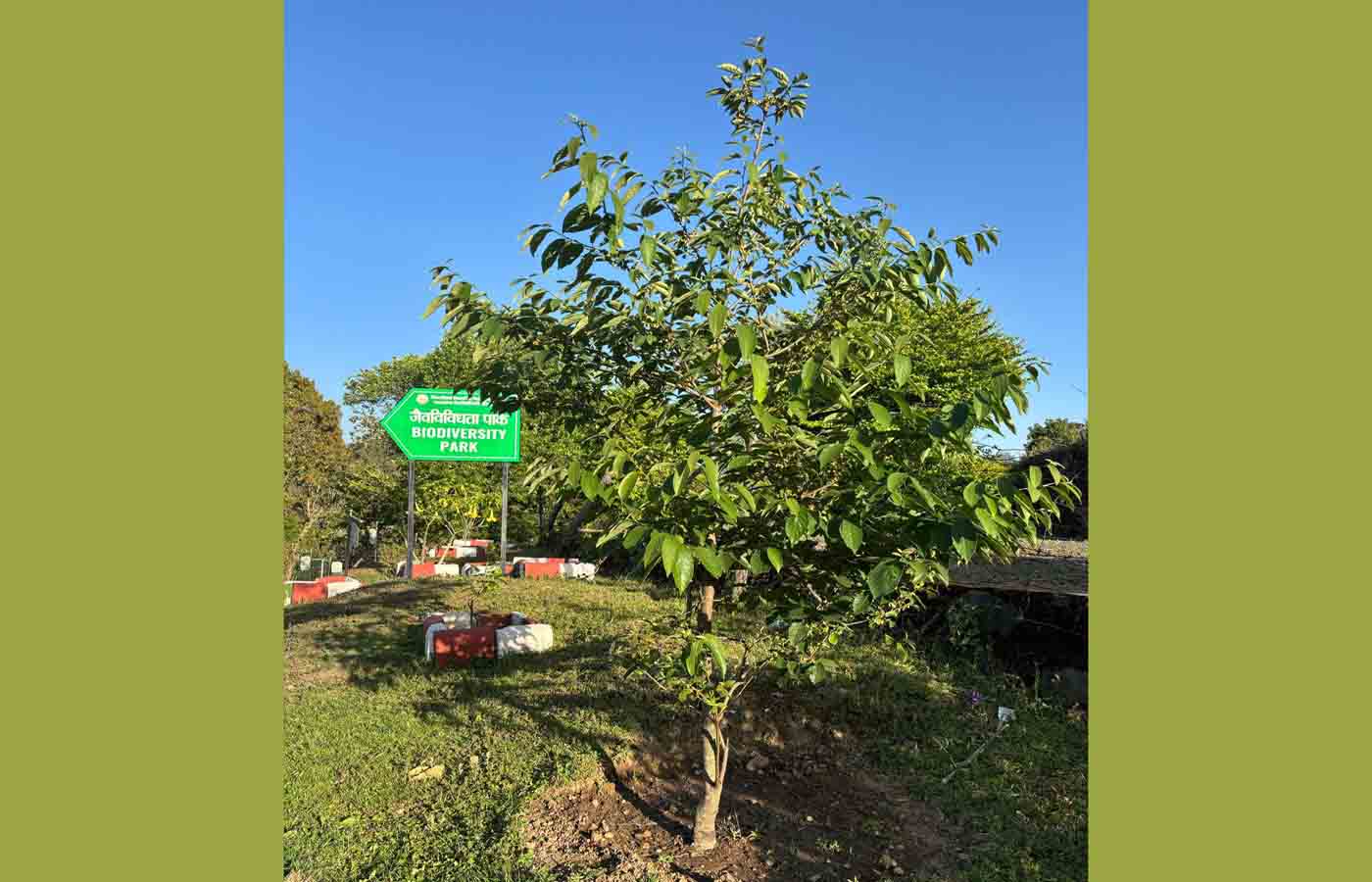
Scientists at the Institute of Biotechnology, Patwadangar have successfully grown Japanese persimmon for the first time in Nainital. The development is being seen as a promising step toward introducing this new cash crop in the mountains.
According to institute in-charge Sumit Purohit, Japanese persimmon (diospyros kaki) is originally grown in countries like Japan, China and Korea. Its successful adaptation to Nainital’s climate has encouraged scientists to explore its commercial potential in the region.
He shared that under the supervision of Uttarakhand Biotechnology Council director Sanjay Kumar, a sapling of persimmon was planted at Patwadangar in 2021. The plant has now matured and is showing healthy flowering, indicating a strong possibility of good fruit production in the upcoming season. Experts state that there is considerable demand for persimmon in international markets which could make it a profitable option for farmers in mountainous areas. If cultivated on a larger scale, it may significantly improve farmers’ income compared to traditional crops. It could also support allied activities like fruit processing, packaging and marketing, which may generate new employment opportunities for local youth.
The fruit typically ripens between September and December and has an orange colour with a tomato-like appearance. It is known for its sweet taste and rich nutritional value. Persimmon contains vitamins A and C, fibre and antioxidants, which are considered beneficial for eye health, immunity, digestion and heart health.
Scientists further say that the climatic conditions of Nainital and nearby regions are highly suitable for this fruit. They believe that persimmon cultivation could help strengthen the rural economy and offer farmers a sustainable, high-value agricultural option.
With increasing focus on horticultural diversification in the mountainous regions of Uttarakhand, the successful cultivation of Japanese persimmon is being seen as an important step towards boosting farmer income and reducing migration from rural areas.