

THE OTHER SIDE
 Paritosh Kimothi
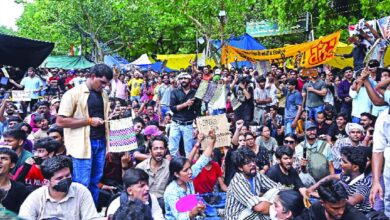
The ongoing controversy involving a segment of Nihang Sikhs has inflamed emotions among many in Uttarakhand, especially as they view that those who were seen to blatantly violate the law were let off without facing legal action. However, the fact is that given such a sensitive situation, the State authorities had few options than to placate those who were viewed by Uttarakhandis as indulging in violence and violating the law. The police are fully capable of thwarting any attempt at coercive movement but then such a response could have amplified the issue to a national level issue. There are political bodies in the nation and some known anti-Bharat bodies abroad who thrive on such situations to spread more discord to affect national interests. Uttarakhand is not alone when it comes to altercations between the locals and visitors as instances of a similar nature have also been reported from neighbouring Himachal Pradesh. One could argue that rather than being an organic outburst of righteous anger, this could also be a result of something not yet out in the open.
Even as a segment of Nihangs stands on its demands, locals and political outfits in parts of Uttarakhand, especially the Garhwal region, are demanding strict checks to prevent a repeat of similar incidents in the future. The demand may be justified as it is not just some of the visitors to Hemkund Sahib but also the Kanwadias, who are known to make their presence felt prominently. There are various aspects to the present situation in which many natives are now recalling either the first Garhwali Granthi of Hemkund Sahib Gurudwara or Rani Karnavati, who used guerrilla tactics to prevent the Mughal invaders from reaching Garhwal. However, the situation being experienced at present did not manifest in a day- various actions and change in attitudes created the conditions which have led to this situation. For example, Lokpal Mandir is an ancient shrine to Lakshman, unique for being the few temples where he is worshipped alone and not in the company of Lord Ram and Sita. While Lakshman had undergone penance here, in his Sheshnag incarnation he had undertaken penance in the glacial lake Lokpal. For centuries, this pilgrimage site was visited by the natives who, according to history books, undertook the pilgrimage barefoot while wearing unstitched garments and observing other purification measures. The natives seem to have forgotten the Lokpal Mandir and the sacred lake which is now called Hemkund by most. When it comes to other aspects of Uttarakhand’s glorious history, it is more alive in folklore and folk music than in monuments set up by the government. The ruins of the monument Rani Karnavati built in a suburban area of Dehradun remain ignored by both the government and the public.It would be interesting for those denigrating Uttarakhand to check history and scriptures which speak of a meeting between Chatrapati Shivaji’s guru Samarth Ramdas and Sikh Guru Hargobind in Garhwal. But then historical records have become all the more odd at a time when most information is gleaned off the internet where the narratives are set according to an agenda. In the latest controversy, clips on social media denigrating Uttarakhand and its people are still circulating widely while even some seemingly harmless statements in favour of Uttarakhand are being removed. Such actions make one wonder if these are part of the continued efforts to divide Sanatan culture.
For example, the social media groups and pages which focused on the unity of various sects of Sanatan Dharm are less visible these days. The positive comments made by members of community appear to be sidelined in favour of inciting statements. With the elections approaching, such actions may increase in the near future. It is upto the natives and the government to put checks in place. The natives too must adopt corrective measures to bring about the change they wish to see.
We need to remember that the economy and life of Uttarakhand existed and even thrived before tourism became an industry. We were trading with Tibet since pre-colonial times and had other means of livelihood too. If the necessary checks are not put in place now, the situation can only worsen in the future.