Need for implementing NIWS guidelines for safe conduct and management of adventure water sports in India

GUEST COLUMN
 Vipul Dhasmana
India has a rich history of water-based adventure sports, with formal commercial activities starting in the 1970s and Goa, then becoming a major hub since the 1990s. Now, almost every State offers various watersports, catering to all age groups. Presently, the Andaman and Nicobar Islands pioneer in adventure water sports. The Tourism Department of Andaman and Nicobar Administration ensures strict implementation of its standard operating procedures (SOPs) in order to regulate adventure water sports in the select islands, besides introducing new water based activities with absolute safety.
The National Institute of Watersports (NIWS), established in 1990 at Goa under the Ministry of Tourism, is the primary authority for watersports regulation, certification, safety standards and industry development in India. It is the only government institution dedicated to recreational watersports and aqua-tourism. It functions under the Indian Institute of Tourism and Travel Management since 2004 being based in Goa. Key responsibilities include certification, safety norms, policy support and industry promotion. NIWS has signed MoUs with multiple State and Central agencies for training and safety audit. It conducts training across various Indian UTs and States including Uttarakhand.
General guidelines for watersports operations
The SOPs cover safety, infrastructure, equipment, staff qualifications, operational norms, documentation, emergency procedures and insurance for all water-based adventure sports in India. Activities include pleasure boating, jet skiing, parasailing, kayaking, scuba diving, river rafting and more. Operations are aligned with Indian and international safety standards. State/Union Territories regulations may add additional norms as per their geographical and hydrographic conditions. There is an urgent need for establishing water sports centers pan India for ensuring accountability and implementing safety norms suggested by NIWS.
Establishing Water Sports Centre (WSC)
A water sports centre must have an accessible location, reception, shelter, changing facilities, embarkation points, equipment storage, safety gear, fuel storage, repair area, log books and liability waivers. Infrastructure ensures safety, operational efficiency and compliance. Equipment must meet international standards and should be certified by a naval architect who must be a domain expert trained by NIWS exclusively for the adventure water sports in rivers, lakes and sea. Adequate rescue equipment, communication devices and first aid must be available. All watercraft and safety equipment must have certifications from authorised international agencies and in addition also be certified for their seaworthiness by a domain expert preferably NIWS trained naval architect with clear capacity markings. Certification from government or international agencies is mandatory.
Operator’s qualifications and staff certification
Staff involved in watersports must be trained and certified by NIWS or recognised agencies, with specific certifications for lifesaving, powerboat handling, PWC operation, parasailing, river rafting, kayaking and snorkeling. Certifications are valid for two years and require renewal. Staff qualifications ensure safety and professionalism. Different roles require specific certifications like lifesaving techniques and powerboat handling. The norms for watersports operations include demarcated activity zones, rescue boat readiness, restricted daylight hours, weather-based suspension and adherence to carrying capacity. Demarcation with flags and floats is mandatory. Rescue boats must be available and manned by certified personnel. Activities are limited to daylight hours, stopping 30 minutes before sunset with operations suspended during bad weather.
Documentation for water-based activities
Operators must possess various certificates, permits and insurance documents, including builder certificates, survey certificates, registration, insurance, staff licenses, safety audits, and NOCs from authorities. Specific documents are required for each activity i.e. pleasure rides, jet skis, parasailing, scuba, etc. Regular inspections and certifications ensure safety compliance. NOCs from local authorities and safety audits are mandatory. Water sports centres must develop, display and regularly practice an Emergency Action Plan (EAP) to handle emergencies like drowning, medical issues, or fire, with coordination with local health facilities. The EAP must assign specific duties to staff. Display in operational areas and conduct weekly drills. Emergency contacts should also be visible. Post-incident debriefings are essential for improvement. Water sports centres must insure guests and staff against personal accidents (minimum Rs 5 lakh per passenger) and cover hull, machinery, and operational risks. Insurance coverage is critical for safety and liability. Guest and crew insurances are mandatory. Adequate coverage mitigates financial risks during accidents.
Motorised watersports activities
Activities like pleasure boat rides, jet skis, parasailing and towable rides require qualified drivers holding valid NIWS or equivalent certifications, with operational norms similar to other watersports. Driver certification validity is two years. Operations are subject to safety and environmental regulations. Proper documentation and safety measures are mandatory for all activities.
Watersports equipment and safety protocols
Comprehensive guidelines ensure safe operation and proper equipment use for various water activities. Equipment includes PFDs, anchor with rope, oars/paddles, fire extinguishers, first aid kits, life buoys, rescue tubes, bailers, spare spark plugs, marine knives, torches, polypropylene ropes, communication devices and other authorised gear. It is the boat driver’s responsibility to ensure all riders wear appropriately sized PFDs that fit snugly and are secured throughout the ride. Operations should be conducted from safe embarkation points like jetties or ramps, with passengers’ weight evenly distributed and seated during rides. Special care is mandated for children, seniors, and differently-abled guests.
Personal water craft (jet ski) operations and safety
Guidelines specify operator qualifications, operational zones, and safety measures for jet ski activities. Operators must hold valid PBH and LST certifications from NIWS or equivalent, and complete NIWS jet ski operation courses. Jet skis should be operated beyond normal swimming zones, avoiding close proximity to other boats, wake jumping, or approaching jetties rapidly. Passengers must wear snug buoyancy aids; rides can be with a qualified driver or customers with a valid license after briefing and familiarisation. Children below 18 are prohibited from independent jet ski rides. Emergency procedures include immediate control transfer if safety instructions are disobeyed.
Parasailing operations and safety measures
Parasailing requires qualified operators, suitable equipment, and designated operational zones. Operators must have remote control powerboat handling and parasailing certification from NIWS, with at least 30 supervised launches. Boats should have adequate engine power, a strong anchor, and a winch with a safe working load of 3,000 kg, replaced after four months or 400 flights. Operations are confined to demarcated beach areas, with a 200-foot warning zone during take-off and landing. Wind speed must not exceed 12 knots; a lookout and standby rescue boat are mandatory. Equipment must be inspected and certified by NIWS or authorised agencies.
Water-skiing and towable rides safety guidelines
Operational safety for water-skiing and towable rides includes qualified personnel, proper equipment, and safety procedures. Operators need valid licenses, with experience in towable rides and lifesaving techniques. Powerboats should have 40-90 HP, capable of 20 knots with a rider. Buoyancy aids of correct size are mandatory; children require appropriately sized aids. Tow ropes for water skis are 6-8mm, 21 meters long, with >350 kg breaking strength; towable tube ropes are 8-12mm, 15-20 meters, >1500 kg strength. Pre-ride checks, clear communication, and a lookout are essential for safety.
Non-motorised water sports operations
These include windsurfing, sailing, kayaking, canoeing and wave surfing with specific operator qualifications and safety protocols. Qualified staff from NIWS, RYA, or equivalent agencies are required while the equipment must meet IRS standards along with regular inspections also mandated. Operating zones should be within visual range, marked and free from stormy weather. Safety gear includes buoyancy aids, helmets, and rescue boats. Specific ratios for guides to guests are set for kayaking (1:4 for singles, 1:6 for doubles, max 12 persons).
White water river rafting safety procedures
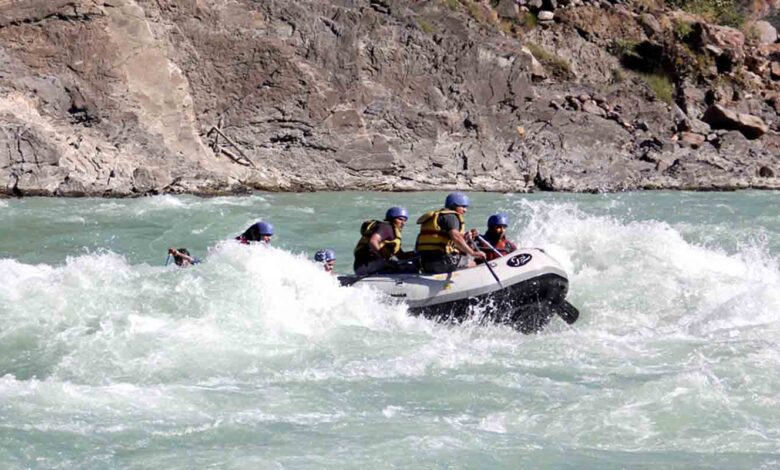
Strict guidelines for operator qualifications, equipment and trip management. Guides must have NIWS competency and lifesaving certifications, with two supervised runs before independent operation. All participants must wear life jackets (minimum 6.14 kg buoyancy), helmets, and appropriate clothing. Safety briefings, trip timing and alcohol restrictions are enforced. Log books must record trip details, incidents, and safety checks.
Lifeguarding and emergency response regulations
It defines qualifications, swimming ability, rescue equipment, and operational norms for pool, beach, and waterpark lifeguards. Pool lifeguards need NIWS LST-PL certification, capable of swimming 100 metres in two minutes, floating for five minutes and diving 15 feet with a five kg weight. Beach lifeguards require Silver or Gold NIWS certification, with swimming abilities of 400 metres in nine minutes or 800 metres in 14 minutes respectively. Waterpark lifeguards follow similar standards to pool lifeguards.
(The author is a marine consultant empanelled with NIWS; views are personal)