



“A fake brand doesn’t just steal sales. It steals a brand’s future”
By Jyoti Lakhoria and Neelam Dahiya
Introduction
Entrepreneurship in India is booming like never before. From small towns to metro cities, a new wave of creators, designers and founders is building bold and distinctive brands. While India’s home-grown brands are making global headlines, a growing number of brands are falling victim to IP theft often at the peak of their success.
Indian brands are facing major problem with copycats, ranging from fake products and cloned apps to copied designs. These days, when a D2C brand launches a popular product, a similar version often appears on online stores within weeks. The copied brands usually have similar packaging, a slightly changed name and much lower prices. This tricks customers and causes confusion and the original brands lose money, market share and trust.
IP Theft in India
Counterfeit goods and services involve copying of popular products sold with nearly identical branding to deceive consumers. Using similar brand names to confuse customers and benefit from established reputation leads to trademark infringement. Many counterfeiters also copy product designs and packaging of the original. From plagiarised write-ups to cloned websites and apps, online IP theft has become widespread.
Causes of IP Theft in India
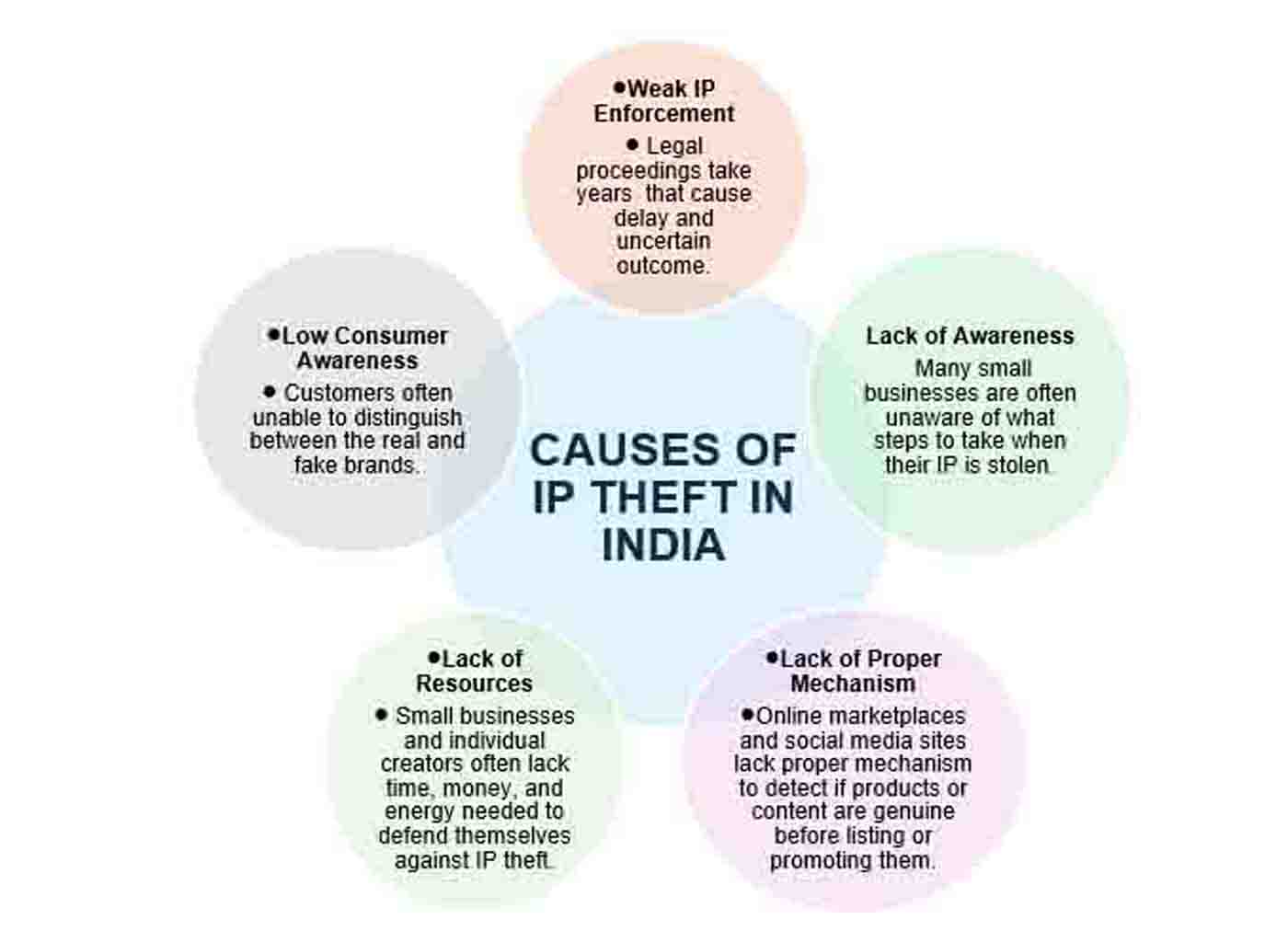 .
.
Legal Approach
To protect brands, the Indian courts have recently taken stronger action against infringement cases, such as:
- The Delhi High Court has revived Crocs’ legal battle against companies copying their iconic clog designs, giving clear indication that IP cannot be copied.
- Amazon, a big e-commerce platform, was fined Rs 340 crore and held responsible for selling counterfeit Beverly Hills Polo Club products. The court emphasised that online platforms must ensure products are genuine.
- Bengaluru-based bakery Happy Belly Bakes, known for its gourmet cookies and cakes, saw an identical product on Amazon with the same name, similar packaging and branding under Amazon’s ‘Happy Belly’ label. The court permanently restrained Amazon from using the brand ‘Happy Belly’.
Measures
To protect intellectual property in India, several key measures need to be implemented. A stronger legal system is essential, including faster access to the courts and strict actions against the habitual offenders. E-commerce platforms and social media websites must provide better mechanisms to report and remove fraudulent listings.
At the same time, creators must keep a watch on the similar and identical brands in the market. The rule is simple: ‘If you build it, protect it.’ Every original idea be it a product, design or concept, deserves protection, not imitation.
A Battle worth Fighting
India must focus not just on creating intellectual property but on actively protecting it. Founders, creators and small businesses are pouring time, talent and heart into building its brands. Yet, many become silent victims of IP theft, choosing not to act, fearing lengthy battles or lack of support. But this silence only fuels the problem. Now is the time to shift gears from reactive to proactive, from victimhood to vigilance.
If India aims for exceptional growth, it must not only create IP but fiercely protect it. In a copycat era, silence isn’t just risky—it’s costly.
(The author is senior associates at S&A Law Offices; views are personal)

