
Jaunsar-Bawar on the brink: Why being a separate district is the last hope for a dying Himalayan region


GUEST COLUMN
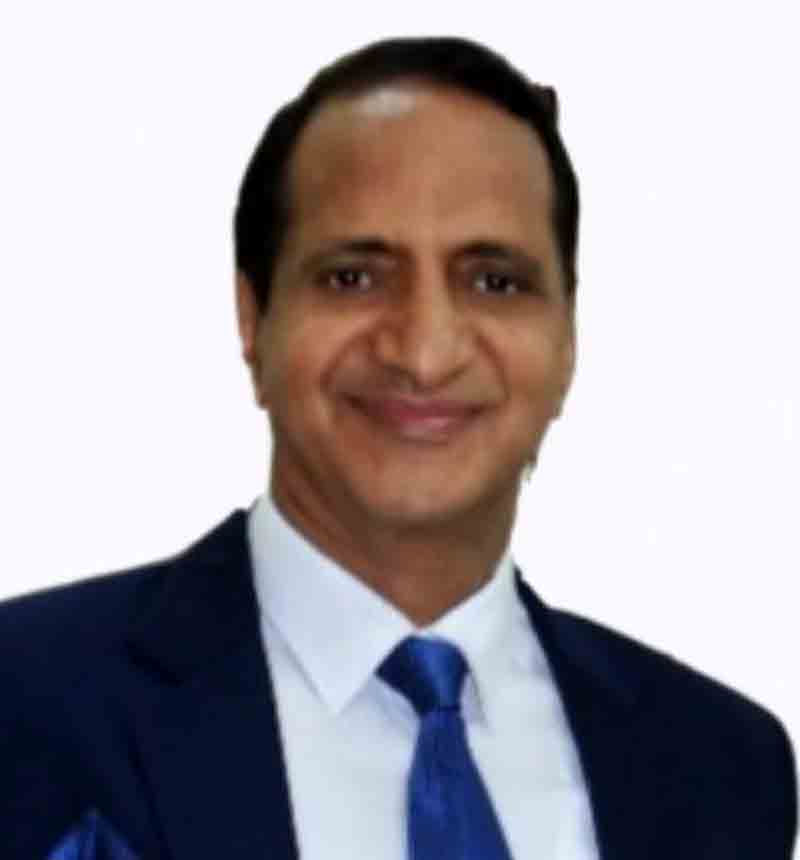 Kripa Ram Nautiyal
For over twenty-five years, one demand has echoed persistently from the high hills of Jaunsar-Bawar—the demand for a separate district. For just as long, that voice has been ignored, deferred or buried under political convenience. Today, Jaunsar-Bawar stands at a critical crossroads. This is no longer a routine administrative question; it is about survival—of a people, a culture, and a strategically vital Himalayan region. The people of Jaunsar-Bawar are seeking the creation of a separate district with Chakrata as its headquarters. This appeal is grounded not in sentiment alone, but in decades of research, fieldwork and lived experience. My book ‘Beyond Polyandry: Changing Profile of an Ethnic Himalayan Tribe’ documents how prolonged administrative neglect has pushed this unique tribal region towards socio-economic stagnation, institutional decay, and large-scale migration.
A legacy of administrative neglect
Jaunsar-Bawar’s history is marked by repeated administrative realignments. At different times, it has been governed from distant headquarters with little understanding of its geography, culture or social structure. Each transition disrupted continuity in planning and policy execution. Instead of being treated as a region with distinct tribal, ecological and developmental needs, Jaunsar-Bawar was reduced to an inconvenient administrative periphery. This neglect has had tangible consequences—delayed infrastructure projects, fragmented welfare delivery, weak institutional presence and a growing sense of alienation among local communities. When governance remains physically and psychologically distant, people inevitably lose faith in the State’s ability to secure their future.
Distance that denies justice
Even in 2026, residents of Jaunsar-Bawar must often spend an entire day navigating treacherous mountain roads to access district-level services in Dehradun. Obtaining a caste certificate, resolving a land dispute, accessing welfare entitlements or even submitting basic applications becomes an exhausting, costly and uncertain ordeal.
This is not merely a logistical inconvenience; it is a denial of equal citizenship. While urban populations increasingly benefit from digital governance and doorstep services, people in Jaunsar-Bawar continue to battle geography and administrative indifference. Structural inequality thus becomes institutionalised.
Education: The crisis that pushes children out
The educational situation in Jaunsar-Bawar is alarming. Many villages still rely on understaffed primary schools, while secondary and senior secondary institutions are few and far between. Teachers are frequently absent due to difficult terrain and lack of incentives, and subject specialists are rare. As a result, children are forced to migrate at an early age to towns and cities for education. Families split, social bonds weaken and young students face cultural alienation and economic hardship. Dropout rates remain high, especially among girls. Higher education opportunities within the region are virtually non-existent, turning education into a driver of permanent migration rather than empowerment. Without a district-level education administration headquartered locally, planning remains generic and disconnected from ground realities.
Healthcare: When geography becomes fatal
Healthcare access in Jaunsar-Bawar is equally distressing. Primary Health Centres and Community Health Centres are inadequately equipped and chronically understaffed. Specialist doctors are rare, diagnostic facilities are minimal and emergency services are unreliable. In medical emergencies—childbirth complications, accidents, cardiac events—patients often have to be transported over long distances on poor roads, turning treatable conditions into life-threatening crises. For the elderly and economically vulnerable, healthcare is not just inaccessible; it is unaffordable. A separate district would enable focused healthcare planning, better staff deployment, emergency response systems, and accountability—none of which can be effectively managed from distant administrative centres.
Development that bypassed the hills
Since the formation of Uttarakhand, economic growth has been real but deeply uneven. Plains and urban centres surged ahead, while remote hill regions stagnated. Jaunsar-Bawar remains among the most neglected. Road connectivity is fragile, often collapsing during monsoons. Digital connectivity—essential in today’s economy—is unreliable. Industrial investment is negligible. Tourism potential remains underdeveloped due to poor planning and lack of infrastructure. Without district status, the region fails to attract sustained public or private investment.
Twenty-five years of broken promises
Perhaps the most corrosive legacy is political. For more than two decades, the promise of a separate Chakrata district has resurfaced during elections, only to vanish afterward. What serves as a slogan for politicians is a question of dignity and survival for the people. This cycle of assurances and inaction has hollowed out democratic faith. When legitimate demands are repeatedly acknowledged yet never fulfilled, governance begins to look performative rather than participatory.
Migration: The silent emergency
Field studies reveal a stark reality- nearly 60 per cent of Jaunsar-Bawar’s population has migrated for education and employment. In several villages, the figure is far higher. Homes stand locked, agricultural terraces lie abandoned and once-vibrant settlements are slipping into demographic collapse. This migration is not aspiration-driven; it is distress-driven. Traditional agro-pastoral systems are disintegrating. The elderly remain behind, while the youth struggle in precarious urban livelihoods. What is unfolding is not just population movement, but cultural erosion.
A national security perspective
Jaunsar-Bawar is also a strategically sensitive, border-proximate region. Sustained out-migration weakens local surveillance, erodes traditional knowledge of terrain, and complicates infrastructure maintenance. In mountain regions, a stable and rooted population is an essential element of national security. Administrative empowerment through district status is a preventive investment—far more effective than reactive measures in depopulated areas.
Learning from the Himachal model
India already has a successful precedent. Himachal Pradesh created smaller, manageable districts to bring governance closer to people. Districts like Kinnaur and Lahaul-Spiti show that even the most challenging terrains can thrive when administration is local, responsive and adequately resourced. There is no rational justification for denying Jaunsar-Bawar the same administrative wisdom.
A right, not a concession
The demand for a separate district is not a plea for charity. It flows directly from constitutional principles of decentralisation, social justice, administrative efficiency, and equitable development. District status would ensure direct budgetary allocation, focused sectoral planning, local employment and preservation of a unique cultural heritage. More importantly, it would restore faith—faith that the state values its most remote citizens.
The choice before the State
Jaunsar-Bawar stands at the edge. Act now, and migration can be reversed, institutions revived and villages re-energised. Delay further, and interventions may come too late to matter. This is a moment for political courage and administrative vision. A separate district for Jaunsar-Bawar is no longer optional—it is imperative. The hills have waited long enough.
(A native of Jaunsar-Bawar, the author is a retired additional director general of the Indian Coast Guard; views are personal)