GUEST COLUMN : 25 years of Uttarakhand: A story of contrasts


Uttarakhand’s formation along with Jharkhand and Chhattisgarh marked a milestone in the politics of State organisation of India. Uttarakhand was a testament of the demand to highlight regional aspirations of the hill folks. Twenty five years later, Uttarakhand has chalked out a significant place for itself in the Indian political scenario, displaying promising numbers in economic and social indicators. Uttarakhand has also emerged as a model of contrasts while experiencing varied political and policy challenges in the 25 years of its statehood. The unfinished agenda of Uttarakhand’s development looms tall among the halls of policy making. The quantitative numbers on the outside do seem impressive and promising but those watching the development paradigm unfold from the margins of the hills might have a different story to tell.
Leadership in flux: 10 chiefs in 25 years
For the past 25 years, the people of Uttarakhand have diligently exercised their right to vote with the earnest hope that their problems would be acknowledged, and their dignity reaffirmed by their political leaders through thoughtful policies. However, the political leadership struggles to further a coherent and tailored development plan for the state. Most of the development so far has suffered due to a centrally skewed political system. Most initiatives and political decisions are leveraged in New Delhi’s corridors of power and do not follow a bottom-up approach. Despite having notable aspirational development projects in place, the community-identified needs of Uttarakhand do not always reflect in decision-making. In the past 25 years, the leadership of Uttarakhand has passed on to 10 chief ministers- which averages to one chief minister every two years. The changes in leadership have been consistent across both BJP and Congress, owing to repeated challenges related to public criticism, electoral failure, along with rampant decision making from the central leaderships of both the parties. Apart from Congress veteran, Narayan Datt Tiwari’s 2002-2007 tenure, no other CM has been able to complete their term in power. BJPs return in 2007 was driven by alternate tenure from Bhuwan Chandra Khanduri and Ramesh Pokhriyal ‘Nishank’. Khanduri’s government championed administrative issues, focusing on good governance and transparency in public services. Taking ownership of the loss of all five Lok Sabha seats in the 2009 elections, Khanduri resigned, giving way to Nishank, who continued the development streak in the state. However, allegations of malpractices and corruption led the central leadership to reinstate Khanduri just few months before the assembly elections, although the anti-incumbency sentiment culminated into the Congress coming to power in 2012 under Vijay Bahuguna’s leadership. The 2013 Kedarnath disaster and the public scrutiny of the government that followed, led to another leadership transfer to Harish Rawat. Bahuguna’s reign was already facing strong opposition for the infamous leniency that was granted for land purchase and liquor across the state. Despite the criticism, it was under Bahuguna’s tenure that the state saw the creation of the crucial State Disaster Response Force (SDRF) which today forms the backbone of disaster response in the fragile Himalayan state.
Rawat soon faced challenges of internal revolts in the party, resulting into an unprecedented constitutional crisis when nine MLAs withdrew support from the Rawat government. The state stayed under President’s rule for almost a month from April to May 2016. After legal battles and winning the trust votes, Rawat was reinstated on May 11, 2016. The party however lost the next state election to BJP.
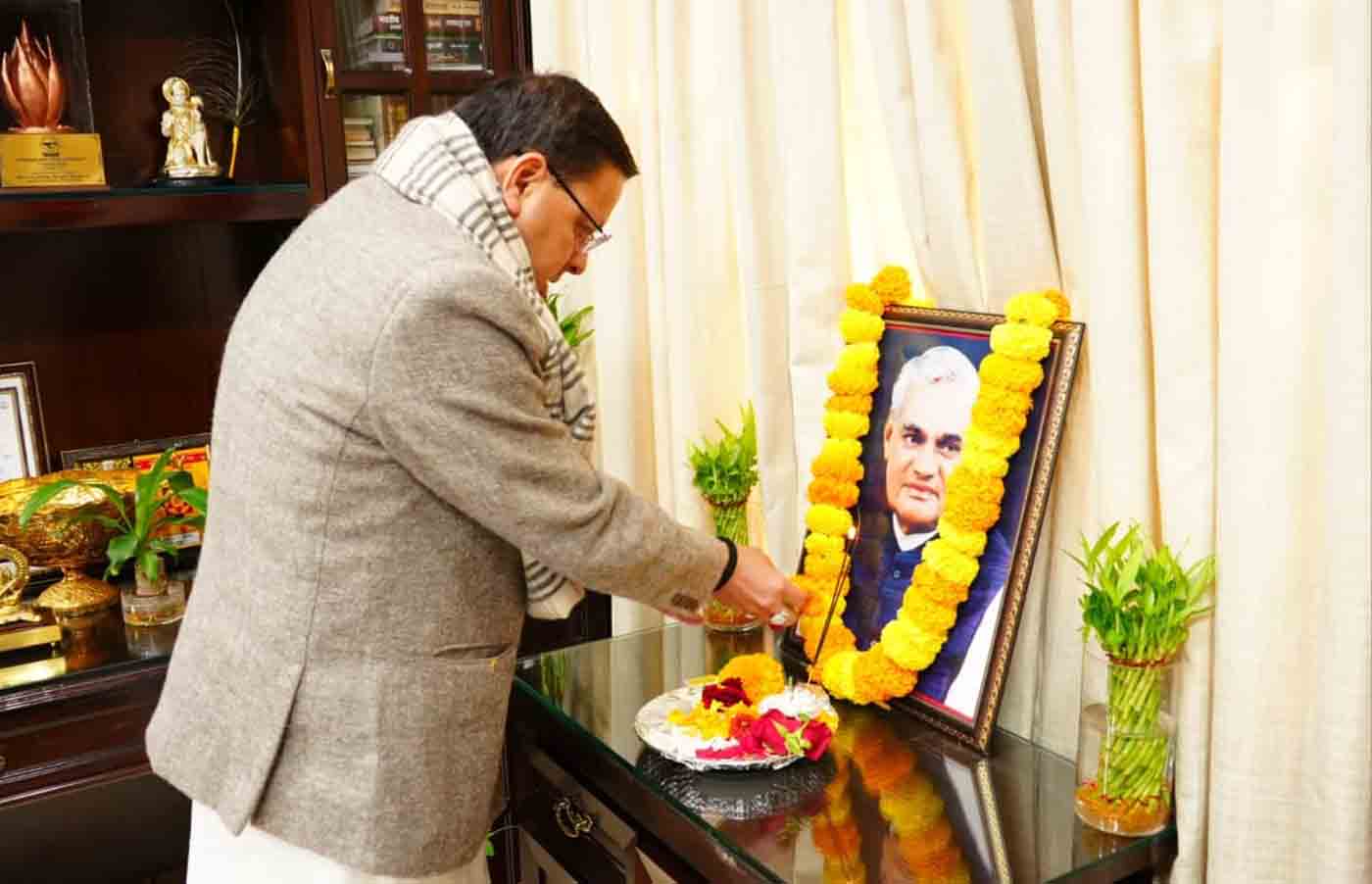
BJPs massive victory in 2017 under Trivendra Singh Rawat, the second longest serving CM after Tiwari, could not translate into a consolidated and stable political system within the state. He served for nearly four years, where the state government diligently aligned with the centre to avail the double-engine benefit. E-governance, administrative transparency and digital services were prioritized by the government. Given the party pressure, he was replaced by Garhwal MP Tirath Singh Rawat who later resigned citing ‘constitutional crisis’. Pushkar Singh Dhami replaced Rawat as the 13th chief minister of the state and third in BJPs 2017-22 five-year legislative term. Having won a second term in 2022, Dhami currently leads the state, aiming to streamline the political narrative of Uttarakhand, by focussing on health, tourism, renewable energy and attracting investments to foster the state as a business and entrepreneurial hub.
Overall, despite the patterns of political discontinuity over the years, key sectors have recorded progress but also solidified the lag that reflected in policy architecture and implementation. It also created institutional vacuum which was filled by administrative rigidity where the two pillars of democratic functioning, the legislature and the executive, worked in different tangents and towards goals that were not complementary to each other. Given the displaced political priorities, it seems that the democratic investment of the locals is not being met with developmental returns.
Silence of regional parties and emerging dissent
The Uttarakhand Kranti Dal (UKD), which once played a determining role in the statehood movement could not covert its mass support into seats in the state assembly. The party succumbed to internal rifts and factions which made it difficult for the party to compete with the resource rich national parties. Given the non-coordinated and fragmented efforts of development over the years, and the inability of local issues to find place in manifestos of national parties has led to the creation of a generation of resented youth across the state. Unifying their voices through art, social media and other forms of outreach, citizen rallies and protests have become more common in the recent past, perhaps following the ancestral legacy of earlier mass movements such as the Chipko and the struggle for statehood.
Political dilemmas: Present and future
Uttarakhand has unfortunately earned for itself, the infamous tag of the least active state legislature. The Uttarakhand legislative assembly has passed numerous bills through rapid pace and compromised examination so much so that in November 2022, the assembly passed 13 bills in a span of two days where most bills were not discussed for more than five minutes. The total number of functioning hours of the state legislature average to merely 12 days per year in the past 25 years. The numbers fail to reflect the democratic commitment and political will of the elected representatives to engage in meaningful deliberations.
The assembly also faces a crisis of representation, making it gradually deficient of representatives from the hills. When the state of Uttarakhand was formed in 2000, initially the state assembly was allotted 70 seats, based on the calculations according to the 1971 census projections. Given the significant number of population residing in the hills, the configuration of seats favoured the hill districts, as compared to the plain and terai regions of the state. This distribution ensured that the rural aspirations of the hill folks be appropriately represented on the floor of the assembly, which was located far off in Dehradun. However, following the 2008 delimitation which applied the 2001 census data, the constituencies were redrawn and owing to the diminishing population the hill lost a significant number of seats. If this trend of chalking out population-based constituencies continues, the already significant gap between hill and plain is set to further widen.
The National Commission on Population Report (2020) already projects an increase in population of Uttarakhand to 12.974 in 2036 from 10.086 million in 2011. The increase, however, would be highly concentrated in the plain areas of districts like Dehradun, Haridwar and Udham Singh Nagar, leaving the hills marginalised and left with limited constituencies, few leaders and hence fewer voices on the floor of the assembly.
Uttarakhand’s development: Mirage or reality?
The state fares impressively as it registered a 21-times growth in economy since its inception. The per capital income in the state, which was Rs 16,232 in 2000, is predicted to reach Rs 2,74,064 in 2024-25. The state’s literacy rate also fares higher than the national average. Quantitative indicators of health and education have been impressive for the state. With growing infrastructure of schools and hospitals, availability of specialist at AIIMS and programmes like Ayushman Bharat and Operation Sanjeevani which provide heli-ambulance services are commendable efforts of the state governments over the years. Though the central leverage has given the state the infrastructural and economic boost required to make it climb the ladder of national rankings, however, it still requires to adequately address the region-specific aspirations. The dominant narrative of ‘major’ development projects often sidelines the daily welfare and quality of life for the locals.
Uttarakhand has always proven to be a resilient society and economy, enduring development experimentations from the times of British India. The Chipko and the statehood movement are classic examples of the commitment of the locals towards their land and its resources under the guidance of motivated, committed and visionary local leaders. Despite this, the contemporary conversations around development are still about the issues that once formed the basis for the statehood movement.
(Semwal is head of political science department at HNB Garhwal University, Naithani is a research scholar. Views expressed are personal)