Rampant construction on river courses & flood plains a recipe for disaster: Experts


PIONEER EDGE NEWS SERVICE | Dehradun
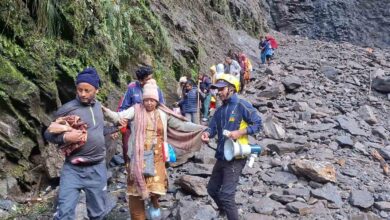
The disaster in Dharali of Uttarkashi has revived the debate on the development model in the sensitive Himalayan belt. The experts point out that the disaster in Dharali occurred due the sudden change of course by the Khir Gadera. In recent years large scale construction occurred in the area which actually was an old course of the rivulet and during the flash flood the stream reclaimed its old path causing huge devastation.
Geologist and Professor at Veer Chandra Singh Garhwali University of horticulture and forestry, S P Sati told The Pioneer that the government and the people have taken no lessons from past disasters particularly the Kedarnath disaster of 2013. He said that in 2013, disaster occurred in the settlements on the past flood plains such as Ramabada, Gaurikund, Sitapur, Bhiri, Agastyamuni and Srinangar. Sati said that despite taking lessons from the disaster of 2013 large scale construction activity has occurred in Kedarnath and the entire Mandakini valley.
He said that there are many areas in Uttarakhand where disasters like Dharali can happen anytime. Sati added that the government should identify all the settlements which are on the old course of rivers and are on flood plains and take appropriate steps.
Glaciologist and Assistant Professor, Geology at Doon University Rajeev Saran Ahluwalia said that in recent years, human activities like road construction, deforestation, and unplanned development near riverbanks have severely reduced the natural water absorption capacity in regions like Dharali. As a result, the land is no longer able to absorb or manage the excess runoff from heavy rainfall or glacial flows.
“Climate change further worsens the situation — increasing monsoon irregularities, intensifying extreme weather events, and accelerating glacial retreat. All these factors combined created the perfect conditions for a disaster like Dharali. To protect Himalayan ecosystems and communities in the future, it is vital to implement scientific slope stability monitoring, hydrological modeling, radar-based rainfall forecasting, and stricter land-use regulations,’’ he said.